
By Aftab Zaidi:
The reverberations of Justice Munir verdict in Maulvi Tameez uddin case are being felt even today. Every military coup was sanctioned and given a legal cover based on this faulty decision. The long lasting ill effects of this judgment were not realized at the time of its announcement. Similarly the outcome of the Mumtaz Qadri case will have profound impact on the future of this nation. The fact that an ex – Chief Justice of Lahore High Court has come forward to argue in favor of a self confessed killer is likely to put further strain on the judges. It appears that anything wrapped in a cloak of religiosity will even blind our arbitrators of justice. After the proclamation of the sentence; the anti terrorist court judge was hurriedly transferred to Lahore after his office was ransacked by a section of lawyers. There have already been violent protests all around the country condemning the verdict and calling for its commutation by the President. Clearly the protestors through their threats and aggressive gestures are trying to mould outcome of the case in their favor.
Lately the courts have also been accused of releasing terrorist suspects. However the judges have defended the acquittals on the basis of lack of evidence provided by the prosecution. The Supreme Court in July ordered the release of Malik Ishaq; a dreaded sectarian killer. . He is the founder of Lashkar-e-Jhangvi (LJ), which is aligned with al Qaeda along with Jandullah and Tehreek-i-Taliban Pakistan. He was implicated in 44 cases of culpable homicide and was acquitted in 34 of those cases. He was also allegedly accused of plotting terrorist plots from the confines of his jail room and indicted in planning and executing the terror attacks on the Sri Lankan cricket team. It has already been reported that Malik Ishaq had in October 1997 admitted to an Urdu daily to being involved in the killing of over a 100 people.
The sectarian temperature has also shot up in the aftermath of his release. There have already been two attacks on Shia Hazaras. On September 19, near the town of Mastung gunmen forced 40 Hazaras to disembark from a bus through which they were traveling to visit Holy sites in Iran; shot them at close range and fled the scene of the crime. Lashkar-e-Jhangvi later claimed responsibility for this attack. Ironically, Malik Ishaq has very close links with this sectarian organization.
The releases of terrorist suspects by courts have been a recurring theme. This has happened despite the fact that mostly ordinary Pakistani citizens have bore the brunt of terror related causalities. A US State Department report in 2010 criticized Pakistan for failing to outlaw militant Islamic groups. It further complained that Pakistan’s acquittal rate of prosecuting suspected terrorists was approximately 75% culminating in release of three out of four defendants. The courts have also been instrumental in the release of Hafiz Muhammad Saeed; the controversial Jamaat-ud-Dawa’s Ameer who was also banned by a UN Security Council resolution. It is pertinent to mention that Mr. Saeed also led the funeral prayers for Osama Bin Laden after his death through a US Navy Seals operation.
The Qadri case presents a very clear evidence of inherent flaws in religiously inspired laws. It also provides the courts with an opportunity to absolve them of the perception that the judges hold a soft corner for the Islamic militants. The evidence is overwhelmingly clear and cogent. However the stay of the sentencing by the Islamabad High Court has again sent the wrong signals. The fight is for the soul of Pakistan. Release of Qadri will have very serious ramifications for the coming generations. This will provide an explicit justification to commit such acts of brute violence in the name of religion. There is still time. The virus of religiously sanctioned killing is still in its embryonic stage. It should be nipped in the bud before it turns into an inferno and engulfing the entire society.
Showing posts with label Extremist. Show all posts
Showing posts with label Extremist. Show all posts
Thursday, October 27, 2011


Aalu Andey vs Gandey Andey: A Tale of Two Videos
Raza Habib Raja
In the past few days, I have had the privilege of seeing two extraordinary videos, one of which spanned barely 3 minutes, and the other was a real brain tester, which lasted for over 30 minutes. The formats were very different, as one was a song, and the other was a television talk show. The schism and the contrast ran much much deeper than the formats, and yet in a strange paradoxical way, there were similarities and an ironical linkage between the two videos.
The thing which connected the two videos was that in the first video, in just breath-taking three minutes, three aspiring musicians gave very credible reasons for what exactly was wrong with the second video. Both the videos were linked in another way: First featured a totally raw rock and roll band, and the second one had Pakistan’s premier vocalist, who once belonged to the most famous rock and roll band Pakistan has ever produced. Two set of musicians, belonging to the same genre, vastly different in experience, but furthest apart in their take on the socio-political scenario of Pakistan.
Ladies and gentlemen, I have posted the links so that you can independently judge yourselves also. The second video has not been posted in its entirety as I have only posted the most “important” portion
Aalu Anday
Ali Azmat with Luqmaan on Khari Baat
Regarding the first video, well I have never in my life seen a video in Pakistan, which within a span of merely three minutes, bares all the hypocritical instinctive foundations of our parallel universe. In those pulse fastening, bewildering, amazing three minutes three youngsters (one of them I happen to know personally also) beat the crap out of the whole right wing narrative. In lyrics, which were simple yet incisive, in a tone which was humorous yet dead serious, and in a video that had innuendos and yet was also so head on, the new group named as “Baighairat Brigade” (Dishonourable Brigade) showed everyone a mirror and showed what in essence honour meant. It showed us that honour is not delusional and misplaced self importance, which in essence is an outcome of our humongous failures in life to achieve anything in economic, cultural and development spheres, but it lies in acknowledging our shortcomings. The group did not try to indulge in some kind of pseudointellectual analysis through some heavy nonsensical words but in a simple intelligible language just sang through the plain facts. Yes, in order to bring out the absurdities they made sure to contrast between what was actually happening and what should actually happen. The following lyrics take the cake:
“Aithe Qadri Baran Nawab hai ithe Hero Ajmal Qasab hai, Mullah nasseya wich Hijab hai, ithe Abdul Salam nu Puchda Koi Nayee “
( Here the Mumtaz Qadri is treated like a Royal, Ajmal Qasab is a hero, the Mullah- the lal Masjid priest who preached about Jihad and yet was coward enough to run veiled as a woman when his own life was under threat- and yet Dr Abdul Salam, Pakistan’s only nobel laureate is being totally ignored just because of his Ahmedi faith)
All these sentences merely state the obvious and yet often denied facts, with the onus being as to how much misplaced heroes we have. In this regard, the contrast between terrorists, murderers and the completely disowned Doctor Abdul Salam was amazing. In merely ten seconds, the group said something which is so obvious and yet never acknowledged. Then the singer went on to poke fun at the rampant conspiracy theory culture particularly the Black Water obsession.
The video was made even more potent by some placards, one of which read: This video is funded by Zionists.
The second video is of a talk show where ace Pakistani singer- solo now- but once the part of the legendary Rock n Roll band Janoon, gave his unique “insight” as to what was wrong with Pakistan. I have over the time become quite accustomed to nonsense, which these talk shows utter but even by their standards, this was “exceptional”. God, Ali Azmat made even Zahid Hamid look like a credible commentator.
Mr. Ali Azmat’s thesis was that West had conspired against us to impose their cultural imperialism and in order to do that had rearranged their music frequency in such a way that it would create mass hypnotism. Mr. Azmat, claimed that everything, including Wall Sreet protest movements, were some sort of a grand conspiracy to take over the world with the ultimate objective to bolster consumerism to help struggling capitalism. And then, under active encouragement from Mubashir Luqman, the fiery host of the program, Ali Azmat went on to declare that everything happening in Pakistan was being directed by the imperial powers with the eventual aim of helping consumerism.
What was mocked at the first video was on full display in the second video. Yet both the videos were humorous though the latter only in its irony. First was a satire, and the second could only be termed as some sort of a black comedy, whch depicted as to how delusional we have become.
But despite everything, the first video has given a faint hope that may be some of us are realizing and therefore articulating of whatever is wrong with the content and intellectual thrust of the second video. And some how or the other, I want to hope because I have still not given up. As the torch of Political Rock N Roll passes to younger blood, some of whom have the nerves to finally say that should have been said long ago, there is every reason to believe that though in fringes, sanity still exists. Well Done Baighairat Brigade..You have given us hope..And yes Daniyal, you have made me proud!!!!
A Double Whammy for the Cyber Army General

Slowly but surely the cyber army general, more popularly known as Zaid Hamid or “Sir” Zaid by his army of silk mustached self styled patriots or the bevy of monikers that circle around his red beret is clawing his way back to the limelight after his Yusuf Kazab association related lull. Yes, we’ll never let anyone forget of that shady association. Of late he’s been making all sorts of nasty waves by appearing on two high profile talkshows where he, in his inimitable audacious style, declares SAFMA as being funded by RAW and understandably enough invites a lawsuit for slander coming his way.
The blithe declaration came forth on that loud mouthed, attention hoor (feel free to use a w before hoor), khala kutni of an anchor Meher Bukhari’s hot show on Duniya TV. That particular show was dedicated to Nawaz Sharif expressing his amicable intentions towards the Indians and recognizing the possibility of a peaceful and prosperous future for Pakistan in the remote possibility of mending fences with India. Understandably, this scandalized the maulvi, fauji and red bereted guests on Meher Bukhari’s show to no end. Of course, Ms Bukhari has to maintain her loudmouthed image on TeeVee that warrants in them big fat pay cheques. All she has to do is pander to the lowest common denominator in the exceedingly conservative right winged populace by invoking the two nation theory mantra, the rattafied ideology of Pakistan in an inordinately high volume and practiced glares. The shrieks led on to Zaid Hamid do his slanderous act and playing the ham fisted defender of Iqbal’s Pakistan.
Here’s the unnecessary value added clip from youtube:
watch?v=LkWvsq53PQ0
The SAFMA slander got Zaid Hamid another gig at Shahid Masood’s latest reincarnation on ExpressNews, ever so modestly titled Shahidnama. As an aside, have you noticed how steadily self referential the title of each new version of his shows are becoming; Views on News (decent enough), Merey Mutabiq (inflated ego alert) and now Shahidnama (what’s next Shahid ki Shahid Dunya?)
Moving on, Dr Shahid invited Zaid Hamid to defend his position as Mr Slander Extraordinaire as well as Marvi Sirmed to provide the other perspective (read common sense) to the firebrand foil. Now it made for 45 odd minutes of rousing entertainment on TV but not without some reservation. For the moment let’s not talk of Zaid Hamid….he’s a stark raving loon. Dr Shahid on the other hand, as opposed to Meher Bukhari’s hysterical antics comes across as a mild mannered, genial enough individual. We are only speaking of appearances here. At the start of the said show, he bemoans the lack of tolerance amongst the highly educated in our culture and the need for basing and argument over facts and reasoning. Very noble of him to acknowledge so but later on he keeps on egging the guests, steering and reducing the argument to a Raw agent vs ISI agent debacle. This isn’t anything new considering Dr Shahid’s track record for understated manipulative dishonesty.
Kudos to Marvi Sermad for whipping Zaid Hamid’s ass. Needless to say this was a gratifying TV moment. Yet I am not so sure if her choice of attire was any tactful in front of a bigot who’s looking for whatever minuscule excuse to label the opponent as the RAW/CIA/Zionist/Capitalist/Hindu/Buddhist/Communist etc etc agents he so clearly endears himself to. More importantly Marvi Sermad’s choice, while living up to her Baghi credentials, wouldn’t bode well with a significant section of the masses who lap up every word of history according to Nawa-i-waqt and Pak Studies curriculum.
You can see the whole splendorous episode starting from this clip thanks to our “choron sey hoshyar” friends on youtube.
watch?v=ENlWhhySHuU&feature=related
Thursday, July 28, 2011
Are we innocent?
The unpardonable doings of Al Qaeda, the other so-called jihadists and Muslim megalomaniacs have certainly contributed to the spread of Islamophobia in Europe and other parts of the western world, but it would be wrong to limit the list of culprits to them. It may be necessary to probe the extent to which the tone and tenor of the war on terror may have contributed to the growth of both militancy in parts of the Muslim world and reckless Muslim-bashing in the West. The idea is not to shift blame from one party to another, it is only a plea for keeping the indigenous sources of terrorism in Europe also in mind.
The world cannot possibly forget the rise of European fascism that built its power by fanning racism and persecuting certain religious and ethnic communities (Jews and Blacks). Nazism is a disease many parts of Europe are still afflicted with. The Norwegian people themselves have had anxieties about neo-Nazi and other extreme-right gangs for more than a decade.
These facts make it necessary for European societies to take note of elements who may be exploiting the public sentiment against terrorists and immigrants to impose on them new and more horrible forms of right-wing tyranny.
The leaders of Islamic thought and Muslim public opinion on their part cannot shun reality by simply telling the Europeans to put their house in order. Nor can they get away by declaring that terrorists constitute a small minority among Islamic scholars and lay Muslims both, however true this statement may be.
They must not ignore the high percentage of Muslims among the terrorists, nor the flurry of edicts issued by recognised Muslim authorities that not only condone and justify acts of terrorism, including the killing of innocent people in suicide bombings, but also exhort the believers to take part in such acts and win a place in paradise.
Regardless of the degree of the Muslim people’s involvement in terrorism that their ulema and political leaders may be prepared to concede, they have a duty to contribute to a solution to the problems created by groups and individuals claiming to be soldiers of Islam. The most important fact to be realised by the Muslim peoples is that they and their next generations will be the biggest losers if the mischief spread by their fanatic fringe is not quickly suppressed.
The people of Pakistan have to do more soul-searching than others because Breivik has blamed this country as the cause of his heinous crime. They should be shocked because besides being a responsible promoter of peace in the world, Norway has consistently been good to Pakistan. For many years, Norway has been helping Pakistan significantly in all areas of economic development, electoral reform, education, culture, heritage, women’s empowerment and human rights. It has been fair and generous to Pakistani immigrants who have been able to achieve distinction in Norwegian society and have been remitting sizeable funds to Pakistan year after year.
All this makes it necessary for Pakistan to make sure that the people of Norway are not influenced by the vitriolic outpourings of Breivik and the like. The critical question is: are we innocent? Can we say that we the Pakistanis have done nothing to offer neo-Nazis or other right-wing extremists an excuse to go out and massacre people?
One of the greatest ironies in the Pakistani people’s collective behaviour is that while the state is engaged in a grim battle with militants in religious garb and we keep telling the world of the number of lives we have lost, Pakistan has never challenged the so-called jihadis at the intellectual or even theological level. On the contrary, state institutions, political parties and the media have been promoting, some of them partly and casually and others wholly and by design, accommodation with terrorists, if not outright collusion with them. Is this not grist to the mills of hate the neo-Nazis are running across the globe?
Breivik has made a distinction between Pakistani immigrants who have integrated themselves with their host communities and those who haven’t. There is a need to look at the conduct of the latter. There have been occasions when Pakistanis have shocked the Norwegian authorities and citizens by killing a woman for ‘honour’, by abducting and forcibly marrying their daughters against their will, and by cheating Norwegian and Pakistani girls. The Norwegians, or any other host society for that matter, will have cause to consider such crimes as an abuse of hospitality and brand the whole Pakistani community as a pack of criminals and swindlers.
There is also need to take a look at the doings of Pakistani visitors to Norway who claim to be on religious missions. We have seen the havoc done in England by the so-called religious preachers. They have divided Muslim immigrant communities, fought battles to capture mosques, exploited the credulous ones and set up extortion rackets. Are Pakistani missions in Europe charged with the task of monitoring such unsavoury activities or with taking steps to ensure that Pakistanis in European countries respect the hosts’ laws and culture instead of propagating their dreams of world conquest?
Recently, the Norwegian public was considerably incensed when one of their nationals, Ehsan Arjumandi, was picked up, allegedly by security agencies in Balochistan, and all efforts by the Norwegian government to have him recovered failed to elicit from Pakistani authorities a response the matter warranted. The publicity this case received in Norway could not have presented Pakistan and its people as friendly, or even responsible, actors. These matters not only bring a bad name to Pakistan, they frighten away investors and traders and materially affect its economic interests.
Of course, the agent of death on the small Norwegian island was not a Pakistani; nor were his weapons of Pakistani origin. But it is very difficult to say that Pakistanis have made no contribution towards making the world increasingly unsafe for the human family. Will history pronounce us innocent? Let all Pakistanis ponder and find a way to avoid being treated as international pariahs. There are quite a few lessons we may learn from the spirit of discipline and forbearance the Norwegian people have demonstrated in their hour of unmitigated tragedy.
Saturday, July 23, 2011
Pakistan’s identity crisis
Flawed
and imaginary Arabized identity has become the biggest curse for
Pakistani nation. The sickening ideologies emanated from this flawed
identity are now posing grave threats to world peace and the very
existence of the country itself
 “These
walls are funny. First you hate 'em, then you get used to 'em. Enough
time passes, you get so depended on them. That's institutionalized.”
--Morgan Freeman as Red in Shawshank Redemption
“These
walls are funny. First you hate 'em, then you get used to 'em. Enough
time passes, you get so depended on them. That's institutionalized.”
--Morgan Freeman as Red in Shawshank Redemption
Pakistan is the primary and worst victim of institutionalized falsehood. How ironic is the fact that the ‘fabrication gurus’ had to concoct so-called ‘Ideology of Pakistan” long after the inception of Pakistan. The chauvinistic and undemocratic mindset, right from the beginning, had a realization the powers will have to be conceded to people if a genuine democracy takes root in newly emerged state.
To keep a tight grip on power and to keep the masses enslaved, a mind control strategy was sought through systematic and institutionalized indoctrination by the crooks at helm of the affairs, especially feudal cum politicians and civil bureaucracy. At that particular time, the military and mullah were ‘dragged into game’ as junior partners, where the later was to act us ‘paid propagandist’ to divert people from real to ‘non-issues’.
The unscrupulous feudal cum politicians had to rely on the ‘muscle power’ of military while confronting the challenge of growing dissenting voices. Thus, it provided an opportunity to military establishment to take the plunge and modify its role from a ‘junior partner’ to a ‘big boss’.
The civil and military establishments both resorted in appeasing the mullah to consolidate their illegitimate regimes. Consequently, the mullah exploited the situation to advance his own agenda. This agenda was (is) based on pan-Islamism and it was the very reason that the mullah had opposed the separation of the Sub-continent earlier. Furthermore, he deemed it a perfect opportunity to avenge his earlier defeats.
However, it was not only typical mullah who played religious cards to advance his agenda. It was a great irony of the history that Mohammad Ali Jinnah, the founding father of the nation and a man with all the secular credentials and liberal in life style resorted in religious rhetoric to popularize his movement for a separate Muslim state. The history repeated itself when Zulfiqar Ali Bhutto, another man in modern outlook betrayed his progressive supporter and thus, opened ‘hell gates’ of extreme religiosity, inflicted on the people by then military dictator Gen. Zia.
While refusing to learn a lesson from the separation of Bangladesh which was also a big blow to the notion that religion can be a binding force of diverse ethnic and cultural groups, the Pakistani establishment thus intensified its institutionalized efforts of carving out a flawed and concocted identity of the country as well as its people.
The establishment was desperate to paint a false identity fearing that the flourishing democracy on the other side of the border may ultimately devour their hegemonic rule. The power hungry establishment was also aware of the fact that the religious euphoria could not really cater to the needs of the all ethnic and cultural groups living in its territory.
Therefore, it was decided to instill this false identity by means of all sorts of coercion and manipulation, including enactment of discriminatory and draconian laws against the minorities and women, changing curricula with infusion of hate speeches, violence and extremely bigoted and intolerant worldview and patronizing violent extremist religious groups.
Besides, the state initiated ruthless Arabization (as newly found identity) of society on the cost of the Baloch, Sindhi, Pashtoon, Punjabi, Saraiki and other indigenous identities. The new imposed Arabized identity had some distinct features i.e. 1-detachment from South Asia and attachment with Middle East, 2-self-hatred (showing distain towards South Asian ancestry and obsessed efforts of tracing genealogy in Arabia, Central Asia or Iran) and love for foreign invaders of the past and sympathies with global jihadists of the present.
Today, this flawed and imaginary Arabized identity has become the biggest curse for Pakistani nation. The sickening ideologies emanated from this flawed identity are now posing grave threats to world peace and the very existence of the country itself. But the people of Pakistan are still not ready to determine who their real enemy is. They are totally oblivious of the history of Sub-continent prior to Arabian invasion on this soil led by Mohammad bin Qasim.
This flawed identity is one of the biggest contributors in widespread confusion in the society about the real enemy. The people of Pakistan, in general, have developed sympathies for Jihadist terrorists as they have a feeling of shared identity with them. Thus, the nation is fighting this battle half heartedly. This identity crisis has produced a population which is falling fast into hypocrisy and double standards.
The people of Pakistan want to emulate Arabs in every sphere of life but at other hand, their social ethos, family system and values all are deeply rooted in their South Asian identity and they have a strange love-hate relationship with this identity. The collective guilt of living “immoral” or un-Islamic (on South Asian ethos) lives is pushing them towards more religiosity and thus more isolation and self-hatred.
As a result of this identity crisis, deliberate disconnect with the past, twisted and biased history and being part of illusionary ‘Umma’, majority of the Pakistanis are living in a state of deep confusion and denial. Thus, they resort in supremacist religious ideologies and glorification of the invaders, just to soothe their bruised but inflated egos. This persistent state of denial, bigotry and confusion is resulting as irrational, extreme and violent behaviors.
“These
walls are funny. First you hate 'em, then you get used to 'em. Enough
time passes, you get so depended on them. That's institutionalized.”
--Morgan Freeman as Red in Shawshank RedemptionPakistan is the primary and worst victim of institutionalized falsehood. How ironic is the fact that the ‘fabrication gurus’ had to concoct so-called ‘Ideology of Pakistan” long after the inception of Pakistan. The chauvinistic and undemocratic mindset, right from the beginning, had a realization the powers will have to be conceded to people if a genuine democracy takes root in newly emerged state.
To keep a tight grip on power and to keep the masses enslaved, a mind control strategy was sought through systematic and institutionalized indoctrination by the crooks at helm of the affairs, especially feudal cum politicians and civil bureaucracy. At that particular time, the military and mullah were ‘dragged into game’ as junior partners, where the later was to act us ‘paid propagandist’ to divert people from real to ‘non-issues’.
The unscrupulous feudal cum politicians had to rely on the ‘muscle power’ of military while confronting the challenge of growing dissenting voices. Thus, it provided an opportunity to military establishment to take the plunge and modify its role from a ‘junior partner’ to a ‘big boss’.
The civil and military establishments both resorted in appeasing the mullah to consolidate their illegitimate regimes. Consequently, the mullah exploited the situation to advance his own agenda. This agenda was (is) based on pan-Islamism and it was the very reason that the mullah had opposed the separation of the Sub-continent earlier. Furthermore, he deemed it a perfect opportunity to avenge his earlier defeats.
However, it was not only typical mullah who played religious cards to advance his agenda. It was a great irony of the history that Mohammad Ali Jinnah, the founding father of the nation and a man with all the secular credentials and liberal in life style resorted in religious rhetoric to popularize his movement for a separate Muslim state. The history repeated itself when Zulfiqar Ali Bhutto, another man in modern outlook betrayed his progressive supporter and thus, opened ‘hell gates’ of extreme religiosity, inflicted on the people by then military dictator Gen. Zia.
While refusing to learn a lesson from the separation of Bangladesh which was also a big blow to the notion that religion can be a binding force of diverse ethnic and cultural groups, the Pakistani establishment thus intensified its institutionalized efforts of carving out a flawed and concocted identity of the country as well as its people.
The establishment was desperate to paint a false identity fearing that the flourishing democracy on the other side of the border may ultimately devour their hegemonic rule. The power hungry establishment was also aware of the fact that the religious euphoria could not really cater to the needs of the all ethnic and cultural groups living in its territory.
Therefore, it was decided to instill this false identity by means of all sorts of coercion and manipulation, including enactment of discriminatory and draconian laws against the minorities and women, changing curricula with infusion of hate speeches, violence and extremely bigoted and intolerant worldview and patronizing violent extremist religious groups.
Besides, the state initiated ruthless Arabization (as newly found identity) of society on the cost of the Baloch, Sindhi, Pashtoon, Punjabi, Saraiki and other indigenous identities. The new imposed Arabized identity had some distinct features i.e. 1-detachment from South Asia and attachment with Middle East, 2-self-hatred (showing distain towards South Asian ancestry and obsessed efforts of tracing genealogy in Arabia, Central Asia or Iran) and love for foreign invaders of the past and sympathies with global jihadists of the present.
Today, this flawed and imaginary Arabized identity has become the biggest curse for Pakistani nation. The sickening ideologies emanated from this flawed identity are now posing grave threats to world peace and the very existence of the country itself. But the people of Pakistan are still not ready to determine who their real enemy is. They are totally oblivious of the history of Sub-continent prior to Arabian invasion on this soil led by Mohammad bin Qasim.
This flawed identity is one of the biggest contributors in widespread confusion in the society about the real enemy. The people of Pakistan, in general, have developed sympathies for Jihadist terrorists as they have a feeling of shared identity with them. Thus, the nation is fighting this battle half heartedly. This identity crisis has produced a population which is falling fast into hypocrisy and double standards.
The people of Pakistan want to emulate Arabs in every sphere of life but at other hand, their social ethos, family system and values all are deeply rooted in their South Asian identity and they have a strange love-hate relationship with this identity. The collective guilt of living “immoral” or un-Islamic (on South Asian ethos) lives is pushing them towards more religiosity and thus more isolation and self-hatred.
As a result of this identity crisis, deliberate disconnect with the past, twisted and biased history and being part of illusionary ‘Umma’, majority of the Pakistanis are living in a state of deep confusion and denial. Thus, they resort in supremacist religious ideologies and glorification of the invaders, just to soothe their bruised but inflated egos. This persistent state of denial, bigotry and confusion is resulting as irrational, extreme and violent behaviors.
The inability to comprehend the concepts of a nation state,
modernity, equality and pluralism has made the perplexed Pakistani
nation incompatible with modern world. Hence, the only areas where they
are far ahead of other nations are massive corruption, extremism,
violence and terrorism. The feature scenario also seems bleak as any
critical thinking is immediately threatened with life. There is a
serious and dire need to revive local (South Asian) identities and to
return to a pluralist society which has a history of thousands of years
in the Sub-continent.
 |
Shafqat Aziz a socio-political analyst based in Islamabad. He is founding member of the online community “Liberal Pakistan”. |
Monday, May 30, 2011
Our collective psychosis

First, the poster-Shaikh of anti-Americanism has been ‘eliminated’ when the mighty guardians were asleep. The new round of WikiLeaks cables reveals anecdotal evidence of civil-military acquiescence to the grand designs of ‘evil’ America, including the nasty drones that kill civilians. And now, the latest attack on a well-guarded naval base and destruction of high-value military equipment has jolted us all.
During May, the militant networks ostensibly inspired by the nihilistic al Qaeda ideology have stepped up acts of terrorism across the country. Yet, the response of the Pakistani right remains locked in the folds of ‘foreign conspiracy’ and fails to review what really ails the polity. The enemy within is still far from being recognised. Even the politicians who are calling for military accountability have little to say about the jihadis waging war against Pakistanis.
It does not matter much when we find out through WikiLeaks that the brotherly countries — Saudia Arabia and United Arab Emirates — and their rich citizens finance terrorist networks. Worse, when the UAE proceeds to hire Blackwater for security, few ‘patriots’ complain. Until yesterday, Blackwater was responsible for all the terror attacks in Pakistan according to the media mujahideen. Even the former chief justice of the Lahore High Court directed the Punjab Police to investigate the role of Blackwater in perpetrating suicide attacks on the widely revered Data Darbar.
I guess Blackwater is kosher now, since a brotherly Arab country has hired its service. Our collective habit of finding bogeys and imagining enemies has turned into a deep psychosis. Many Pakistanis believe that Osama was not there in the Abbottabad compound. Urdu press and TV channels augment this world view and politicians play up the insecurity mantra. The parliamentary resolution of May 12 is another exercise in this collective search for sovereignty, glory and honour. Alas, these days glory is achieved through human development, through trade and investment and not empty rhetoric citing the glorious past of the Muslims.
It is therefore understandable that the oracles on TV sets are blaming the US-India-Israel axis for the attacks on the Mehran Naval Base by chanting the ‘who benefits’ mantra. Now, the Pakistani mind is convinced that the May events are a prelude to a forthcoming attack on our nuclear assets. We are gifted with too many assets: Dozens of militant groups, two Taliban streams and, of course, the nuclear weapons, which will have to be guarded. Never mind the people of this country. They are dispensable as long as honour is preserved. It is time to address the mythologies we have constructed and deal with ourselves before we ‘defeat’ the enemies.
The writer is consulting editor, The Friday Times.
Published in The Express Tribune, May 26th, 2011.
Things More Important than Sovereignty and Honor
Zia Ahmad
7 days ago, a motley crew of a handful militants raided and occupied a highly sensitive and supposedly heavily fortified Naval air base in Karachi. The ensuing battle lasted for sixteen plus hours at the cost of ten military personnel, fourteen injuries and two surveillance planes. Bear in mind, these are the official numbers. We can’t really blame the people if they find the official toll of damages suspect and assume a higher count of casualties.
It is also said that a contingent of a hundred commandos was deployed to reclaim the naval base. Let’s run the numbers again:
15 – 20 militants
100 “elite” commandos
16 hours of combat
Don’t fault yourself if the numbers don’t add up. Unlike the Abbottabad fiasco, one can bet on incompetence on part of the khakis rather than complicity. The kind of incompetence, as it happens more often than one cares to keep up with, on so many levels that most of us (being the tax payers) have a right to demand if the bloated defense budget is being put to any use.
Now that the Pak Army and ISI have acknowledged a major intelligence failure on the Osama episode, one would have expected them khaki jawans to be on their toes. Pakistani Taliban and Al Qaida didn’t waste any time in promising a fierce backlash in the wake of Osama’s death. That ought to have set all sorts of rainbow colored alarms going around in GHQs of all sizes and shapes. Security and intelligence would have been expected to be an utmost priority. Soon after, a suicide explosion claimed 80 lives at a military training academy near Charsadda. Do we expect the ISPR to issue out another brazen proclamation that nobody was prepared for this.
Last night’s attack and the consequent marathon attempt to reclaim the naval base have done much to dent our confidence in those who are sworn to protect us. What we all ask is if the armed forces can’t protect their assets and indeed themselves, what about us bloody civilians?
It may be too much to ask for the unhealthy fixation with men in khaki amongst the children and adolescents of all ages to wear thin. Our collective amnesia or perhaps the innate tendency to avoid our own grave follies and look the other way (think of episodes as far back as ’71 or as recent as a similar TTP attack on GHQ in ’09) may risk this instance to be sidestepped by some political circus attraction. Even worse, some of the less than bright and more than emotional right wingers would start whining about the drone attacks (wikileaks be damned) and gripe on about the imagined sovereignty and fanciful honor.
Speaking of which, didn’t our dear general make a very “ba-ghairat” claim of not letting anything frivolous such as prosperity compromise our honor. Dear sir, please remember you lead the army of a third world country struggling with drinking water and energy, not the Klingon empire. He also made this claim about breaking the TTP’s back. That was a bit premature sir.
The reverence extended towards the Pak fauj doesn’t show any sign of letting up. TV channels and certain talking heads go on about reminding how the Pak army is the one of the biggest in the world (its all about the size) and offer one kind of justification or the other. Please sirs and bajees, don’t you think with all the tall and mighty claims, the Pak army should also be expected to fight threats other than Indian in origin. And most of you already think India’s behind TTP so that argument doesn’t bode well.
As for our civil benefectors; Mr Rehman Malik and PM Gilani offer their predictable patterns of condemnation and resolves of fighting on the good fight…or something. Hats off to them for keep issuing those tired old monotonous comments one bad event after the other. And you’ll agree there have been fairly a lot of them over the last couple of years. One thing I always wanted to ask the PM was, if God forbid someone was to bomb his front yard of his residence away, what would be his response….another tired old condemnation. Then again he is authority on what is absurd and what is not.
We ask our esteemed Chief of Staff to reclaim our confidence in our own army. With a grim realization we should brace ourselves for more ugly attacks on something more important than our sovereignty and that is hope.
7 days ago, a motley crew of a handful militants raided and occupied a highly sensitive and supposedly heavily fortified Naval air base in Karachi. The ensuing battle lasted for sixteen plus hours at the cost of ten military personnel, fourteen injuries and two surveillance planes. Bear in mind, these are the official numbers. We can’t really blame the people if they find the official toll of damages suspect and assume a higher count of casualties.
It is also said that a contingent of a hundred commandos was deployed to reclaim the naval base. Let’s run the numbers again:
15 – 20 militants
100 “elite” commandos
16 hours of combat
Don’t fault yourself if the numbers don’t add up. Unlike the Abbottabad fiasco, one can bet on incompetence on part of the khakis rather than complicity. The kind of incompetence, as it happens more often than one cares to keep up with, on so many levels that most of us (being the tax payers) have a right to demand if the bloated defense budget is being put to any use.
Now that the Pak Army and ISI have acknowledged a major intelligence failure on the Osama episode, one would have expected them khaki jawans to be on their toes. Pakistani Taliban and Al Qaida didn’t waste any time in promising a fierce backlash in the wake of Osama’s death. That ought to have set all sorts of rainbow colored alarms going around in GHQs of all sizes and shapes. Security and intelligence would have been expected to be an utmost priority. Soon after, a suicide explosion claimed 80 lives at a military training academy near Charsadda. Do we expect the ISPR to issue out another brazen proclamation that nobody was prepared for this.
Last night’s attack and the consequent marathon attempt to reclaim the naval base have done much to dent our confidence in those who are sworn to protect us. What we all ask is if the armed forces can’t protect their assets and indeed themselves, what about us bloody civilians?
It may be too much to ask for the unhealthy fixation with men in khaki amongst the children and adolescents of all ages to wear thin. Our collective amnesia or perhaps the innate tendency to avoid our own grave follies and look the other way (think of episodes as far back as ’71 or as recent as a similar TTP attack on GHQ in ’09) may risk this instance to be sidestepped by some political circus attraction. Even worse, some of the less than bright and more than emotional right wingers would start whining about the drone attacks (wikileaks be damned) and gripe on about the imagined sovereignty and fanciful honor.
Speaking of which, didn’t our dear general make a very “ba-ghairat” claim of not letting anything frivolous such as prosperity compromise our honor. Dear sir, please remember you lead the army of a third world country struggling with drinking water and energy, not the Klingon empire. He also made this claim about breaking the TTP’s back. That was a bit premature sir.
The reverence extended towards the Pak fauj doesn’t show any sign of letting up. TV channels and certain talking heads go on about reminding how the Pak army is the one of the biggest in the world (its all about the size) and offer one kind of justification or the other. Please sirs and bajees, don’t you think with all the tall and mighty claims, the Pak army should also be expected to fight threats other than Indian in origin. And most of you already think India’s behind TTP so that argument doesn’t bode well.
As for our civil benefectors; Mr Rehman Malik and PM Gilani offer their predictable patterns of condemnation and resolves of fighting on the good fight…or something. Hats off to them for keep issuing those tired old monotonous comments one bad event after the other. And you’ll agree there have been fairly a lot of them over the last couple of years. One thing I always wanted to ask the PM was, if God forbid someone was to bomb his front yard of his residence away, what would be his response….another tired old condemnation. Then again he is authority on what is absurd and what is not.
We ask our esteemed Chief of Staff to reclaim our confidence in our own army. With a grim realization we should brace ourselves for more ugly attacks on something more important than our sovereignty and that is hope.
Tuesday, May 17, 2011
Myth-busting the Bangladesh war of 1971
An author discusses her new book about the historical narratives of the 1971 civil war that broke up East Pakistan.  | ||
In all the excitement about the "Arab spring" it is instructive to remember the 1971 war in South Asia. Then too there was a military regime in Pakistan, easily identified as the "baddies" - and a popular uprising in its rebellious Eastern province, where Bengali nationalists were reported to be peacefully seeking freedom, democracy and human rights. When the regime used military force to crush the rebellion in East Pakistan, India intervened like a knight to the rescue, resulting in the defeat of the bad guys, victory for the good guys and the independence of Bangladesh... Or so the story went for forty years. I grew up with it in Calcutta. It was widely repeated in the international press. Several years ago I decided to chronicle a number of incidents of the 1971 war in-depth. I observed that many Bangladeshis were aggrieved that the world seemed to have forgotten the terrible trauma of the birth of their nation. Given the scale of the suffering, that lack of memory certainly appeared to be unfair, but there did not seem to be many detailed studies of the war - without which the world could not be expected to remember, or understand, what had happened in 1971. My aim was to record as much as possible of what seemed to be a much-commented-on but poorly documented conflict - and to humanise it, so that the war could be depicted in terms of the people who were caught up in it, and not just faceless statistics. I hoped that the detailed documentation of what happened at the human level on the ground would help to shed some light on the conflict as a whole. The principal tool of my study was memories. I read all available memoirs and reminiscences, in both English and Bengali. But I also embarked on extensive fieldwork, finding and talking to people who were present at many particular incidents, whether as participants, victims or eye-witnesses. Crucially, I wanted to hear the stories from multiple sources, including people on different sides of the war, so as to get as balanced and well-rounded a reconstruction as possible. As soon as I started to do systematic research on the 1971 war, I found that there was a problem with the story which I had grown up believing: from the evidence that emanated from the memories of all sides at the ground level, significant parts of the "dominant narrative" seem not to have been true. Many "facts" had been exaggerated, fabricated, distorted or concealed. Many people in responsible positions had repeated unsupported assertions without a thought; some people seemed to know that the nationalist mythologies were false and yet had done nothing to inform the public. I had thought I would be chronicling the details of the story of 1971 with which I had been brought up, but I found instead that there was a different story to be told. Product of research My book Dead Reckoning: Memories of the 1971 Bangladesh War, the product of several years of fieldwork based research, has just been published (Hurst and Co. and Columbia University Press). It focuses on the bitter fratricidal war within the province of East Pakistan over a period of a little more than a year, rather than the open "hot" war between India and Pakistan towards the end. It brings together, for the first time, the memories of dozens of people from each side of the conflict who were present in East Pakistan during the war. It lets the available evidence tell the stories. It has been described as a work that "will set anew the terms of debate" about this war. Even before anyone has had the chance to read it, Dead Reckoning has been attracting comment, some of it of a nature that according to an observer would make the very reception of my book a subject of "taboo studies". "Myth-busting" works that undermine nationalist mythology, especially those that have gone unchallenged for several decades, are clearly not to be undertaken by the faint-hearted. The book has received gratifying praise from scholars and journalists who read the advance copies, but the word "courageous" cropped up with ominous frequency in many of the reviews. Some scholars praised my work in private; others told me to prepare for the flak that was bound to follow. One "myth-busting" scholar was glad my book was out at last, as I would now sweep up at the unpopularity stakes and she would get some respite after enduring several years of abuse. Scholars and investigative journalists have an important role in "busting" politically partisan narratives. And yet, far too often we all fall for the seductive appeal of a simplistic "good versus evil" story, or fail to challenge victors' histories. So far the story of valiant rebels fighting oppressive dictators in the so-called "Arab spring" has had one significant blemish - the vicious sexual attack and attempted murder of CBS foreign correspondent Lara Logan by dozens of men celebrating the downfall of Hosni Mubarak in Tahrir Square in Cairo. It initially vanished from the headlines and has still not led to the kind of questioning of the representation of such conflicts that it should have generated. "Tahrir Square" became shorthand for freedom and democracy-loving people rising up against oppressive dictators. People in other countries started to say they wanted their own "Tahrir Square". Logan has given a brave and graphic account of what happened to her at the hands of those supposedly celebrating the fall of a dictator and the coming of freedom, democracy and human rights. Her life was saved by burqa-clad Egyptian women and she was rescued by soldiers. Her account endows "Tahrir Square" with an entirely different meaning. It should caution us against assuming that all those opposing an oppressive regime are champions of non-violence, democracy or human rights. It should alert us to the complexities of political power struggles and civil war, and stop getting carried away by what we imagine is happening, or would like to happen, rather than what the evidence supports. Such was the impact of the 1971 war on South Asians that the year has transformed into a shorthand for its particular symbolism: 1971, or ekattor, the number 71 in Bengali, has come to stand for a simple equation of a popular nationalist uprising presumed to embody liberal democratic values battling brutal repression by a military dictatorship. But was it really as simple as that? Over time, the victorious Bangladeshi nationalist side's narrative of Pakistani villainy and Bengali victimhood became entrenched through unquestioned repetition. The losing side of Pakistani nationalists had its own myth-making, comprising vast Indian plots. Pakistan had been carved out of the British Empire in India as a homeland for South Asia's Muslims. It was a problematic idea from the start - a large proportion of Muslims chose to remain in secular and pluralistic India, for instance, and its two parts, West Pakistan and East Pakistan, were separated by a thousand miles of a hostile India. In 1971 the idea of Islam as the basis of nationhood came apart in South Asia along with the country of Pakistan, after a mere 23 years of existence. What went wrong? And what do the memories of those who were there reveal about the reality of that war? The publication of Dead Reckoning has spoiled the day for those who had been peddling their respective nationalist mythologies undisturbed for so long. Careers have been built - in politics, media, academia and development - on a particular telling of the 1971 war. All the warring parties of 1971 remain relentlessly partisan in recounting the conflict. As the dominant narrative, which has gained currency around the world, is that of the victorious Bangladeshi nationalists and their Indian allies, they stand to lose the most in any unbiased appraisal. Unsurprisingly therefore, the protests from this section are the shrillest. Mixed reaction The reaction to the publication of Dead Reckoning by those who feel threatened by it has followed a predictable path. First, there has been an attempt to damn the book before it was even available. Apart from random rants on the internet - which provides opportunity for anyone to rail against anything - reports have been written by people who haven't read the book, citing other people who also haven't read the book. The reason for this may be summed up as the well-founded fear of "knowledge is power". When people read the book they will be far better informed as to what really happened in 1971. Hence the desperate attempt by those who have been spinning their particular yarns for so long to try to smear the book before anyone gets the chance to read it. A few people also seem to be trying to laud the book before reading it, an equally meaningless exercise. These commentaries are easy to dismiss: clearly, those who haven't read the book have nothing of value to say about it. Second, detractors of the book claim that it exonerates the military from atrocities committed in East Pakistan in 1971. In reality the book details over several chapters many cases of atrocities committed by the regime's forces, so anyone who says it excuses the military's brutalities is clearly lying. The question is - why are they lying about something that will easily be found out as soon as people start reading the book? The answer to this question is more complex than it might seem. Of course the detractors hope that by making such claims they will stop people from reading the book. Part of the answer lies also in that the book corrects some of the absurd exaggerations about the army's actions with which Bangladeshi nationalists had happily embellished their stories of "villainous" Pakistanis for all these years. But an important reason for falsely claiming that the book exonerates the military is to distract attention from the fact that it also chronicles the brutalities by their own side, committed in the name of Bengali nationalism. The nature and scale of atrocities committed by the "nationalist" side had been edited out of the dominant narrative. Its discovery spoils the "villains versus innocents" spin of Bangladeshi nationalist mythology. A key question about the "controversy" over Dead Reckoning is why this book is stirring such passions when other works do not. One reason for this is that there are precious few studies of the 1971 war based on dispassionate research. This is the first book-length study that reconstructs the violence of the war at the ground-level, utilising multiple memories from all sides of the conflict. Two eminent US historians, Richard Sisson and Leo Rose, published the only research-based study of the war at the diplomatic and policy level twenty years ago. Their excellent book, War and Secession: Pakistan, India and the Creation of Bangladesh (University of California Press, 1990), challenged the dominant narrative, but their work does not seem to be known among the general public as much as within academia. However, a crucial reason for the special impact of Dead Reckoning has to do with who the author is. I am a Bengali, from a nationalist family in India. As Indians and Bengalis our sympathies had been firmly with the liberation struggle in Bangladesh in 1971. The dominant narrative of the 1971 war is the story as told by "my side", as it were. My reporting of what I actually found through my research, rather than unquestioningly repeating the partisan narrative or continuing the conspiracy of silence over uncomfortable truths, is thus taken as a "betrayal" by those who have profited for so long from mythologising the history of 1971. It is important to note that not all South Asians subscribe to the myth-making. One eminent Indian journalist thought that my "courage, disregard for orthodoxy and meticulous research" in writing Dead Reckoning made me "the enfant terrible of Indian historians". A senior Bangladeshi scholar has found it "fitting that someone with Sarmila's links with Bengali nationalism should demonstrate that political values cannot be furthered by distorting history." South Asians are prone to conjuring up all manner of conspiracy theories when faced with unpleasant realities, but those looking for one for Dead Reckoning are at a loss, as the only explanation for what it contains is that it reconstructs what really happened on the basis of available evidence. The process of dismantling entrenched nationalist mythologies can be painful for those who have much vested in them, but the passions stirred by the publication of Dead Reckoning has sparked the debate that the 1971 war badly needed - and set on the right course the discussion of this bitter and brutal fratricidal war that split the only homeland created for Muslims in the modern world. Sarmila Bose is Senior Research Fellow in the Politics of South Asia at the University of Oxford. She was a journalist in India for many years. She earned her degrees at Bryn Mawr College (History) and Harvard University (MPA and PhD in Political Economy and Government.) Dead Reckoning: Memories of the 1971 Bangladesh War is published by C. Hurst and Co. and Columbia University Press. The views expressed in this article are the author's own and do not necessarily reflect Al Jazeera's editorial policy. |

Pakistan's Yuppies in Danger
Pakistan’s small middle class is vulnerable and exposed to the growing violence between al Qaeda and the government. Novelist Lorraine Adams on why this vital group cannot be forgotten by the U.S.
Ever since Osama bin Laden’s demise, I’ve been worried about PUPPies—Pakistani Upwardly Mobile Urban Professionals. They’re a vulnerable and endangered species, despite their Twitter accounts, iPhones, and Facebook pages. College-educated Pakistan (roughly 4 percent of the country’s 170 million people) may be much smaller than Egypt’s, and may have different gripes with their government, but its members share many values with their Arab counterparts. As the news broke over Twitter last week, PUPPies had plenty to say about the death of the man hiding in an ugly house in a town most of them remembered as a decidedly uncool childhood vacation spot. (Think of the Adirondacks or Catskills, if you’re a New Yorker.) They know that terrorists keen on retaliatory strikes for bin Laden’s killing will be looking for them.
 Rizwan Tabassum / Getty Images Some writers—among them my friend the novelist Mohsin Hamid and the Guardian’s Declan Walsh and Jason Burke—are familiar with this sliver of Pakistan’s middle class. But most, including Salman Rushdie, who called for declaring Pakistan a terrorist state, sometimes seem to believe in a monolithic Pakistan sympathetic to terrorism, intolerantly Islamic and anti-West. They say the military, which represents the largest component of the middle class, is guilty of harboring bin Laden. If they have their way, the Pakistanis who are most like Westerners—English-speaking folk who carry Blackberries, watch Fashion Week on YouTube, twittered against the murder of anti-blasphemy law crusader Salman Taseer, and obsess about grades for college or medical school—will be thrown to the terrorist pack.
Since 2006, I’ve been traveling to Pakistan to research my last novel and the novel I’m currently writing. I’ve spent time in the border town of Torkham, the Swat Valley, the garrison town Ralwapindi, but mostly in cities—Peshawar, Islamabad, and Lahore. When I first started visiting these were tranquil places. But in 2008, Lahore exploded with its first suicide bombing. Pakistanis from all walks of life became vulnerable, but terrorists have targeted places where tolerant Muslims gather, such as urban shopping centers, Sufi shrines, and cricket fields.
Monday, less than 24 hours after the bin Laden operation, a couple of my Pakistan friends in their 20s—an orthodontist and a medical school student—were far more sober than their American counterparts. These women are devout Muslims (they adhere to virginity before marriage and never drink), but like their counterparts in Tahrir Square, are enlightened observers. One wrote: “We got Osama! But remember that this justice has come at the cost of a decade of war in Afghanistan and Pakistan. While America, by virtue of its 'wealth and power' may be relatively immune, for Pakistan, this day marks mixed feelings of triumph and fear—triumph over the death of a common enemy but fear that darker times marked by fundamentalist backlash and the withdrawal of American support may have begun.”
Said another, “It shows that our military is either incompetent or complicit. Either way, the world is unhappy with Pakistan. We're sitting in the corner wearing a dunce cap yet again. The Taliban is unhappy with Pakistan. If anything, we'll be seeing more blasts in the coming months. If they had kept him alive, that would have helped fight them. It's too soon to say for sure what's going to happen next. At the most, this is a moral victory for 9/11 families. But my 2c—it doesn't help fight the terrorists which are multiplying by the day.”
Just how much support Pakistan’s Inter-Services Intelligence and the military gave to bin Laden or any extremists is the subject of government investigation, and has been debated ad nauseam among analysts. Most American commentators quote the highly respected Ahmed Rashid, who recently wrote in The New Republic that they give terrorists enough help to keep “the pot boiling but not overflowing.” Others such as Anatol Lieven, in his new book about Pakistan, argue that military support for extremists in Kashmir and Afghanistan exists but inside Pakistan is thin.
Either way, life for Pakistan’s educated—because the government is such a corruption-saturated institution—is not much better than it is for its poor. Except for one, yes one, hospital in Karachi, medical care is far below international standards. Country-wide, the lack of utilities, even in urban areas, leads to absurdist predicaments. One of my friends, the mother of a 4-month-old, was trying to give him a hot bath in January. An absence of natural gas for the water heater led her to innovate. She got an electric kettle and plugged it in, transferring a teapot of hot water into the tub. But then, the electricity was cut off—Pakistan doesn’t have enough, and major cities regularly have 16 hours a day without it—and the tub was far from full. “Oh crap,” she said in frustration. I remember looking over at the bedroom bookshelf visible from her bathroom; there was an Orhan Pamuk, Daniyal Mueenuddin, Gabriel Garcia Marquez, and others. For all her thoughtfulness and spirit, she was living with problems plenty of slum dwellers in the United States rarely face. Later that day, talking about the situation, she told me, “It’s not for me to question. If I question I create problems. Why do that? It’s better to accept it.”
In these days after bin Laden’s killing, I hope her stoicism continues to keep her sane. Whether it keeps her safe is up to leaders, worldwide and in Pakistan, for whom she is largely invisible.
Lorraine Adams, a Pulitzer Prize-winning author and reporter, is the author of Harbor and The Room and the Chair. She lives in New York City.
Ever since Osama bin Laden’s demise, I’ve been worried about PUPPies—Pakistani Upwardly Mobile Urban Professionals. They’re a vulnerable and endangered species, despite their Twitter accounts, iPhones, and Facebook pages. College-educated Pakistan (roughly 4 percent of the country’s 170 million people) may be much smaller than Egypt’s, and may have different gripes with their government, but its members share many values with their Arab counterparts. As the news broke over Twitter last week, PUPPies had plenty to say about the death of the man hiding in an ugly house in a town most of them remembered as a decidedly uncool childhood vacation spot. (Think of the Adirondacks or Catskills, if you’re a New Yorker.) They know that terrorists keen on retaliatory strikes for bin Laden’s killing will be looking for them.
Rizwan Tabassum / Getty Images Some writers—among them my friend the novelist Mohsin Hamid and the Guardian’s Declan Walsh and Jason Burke—are familiar with this sliver of Pakistan’s middle class. But most, including Salman Rushdie, who called for declaring Pakistan a terrorist state, sometimes seem to believe in a monolithic Pakistan sympathetic to terrorism, intolerantly Islamic and anti-West. They say the military, which represents the largest component of the middle class, is guilty of harboring bin Laden. If they have their way, the Pakistanis who are most like Westerners—English-speaking folk who carry Blackberries, watch Fashion Week on YouTube, twittered against the murder of anti-blasphemy law crusader Salman Taseer, and obsess about grades for college or medical school—will be thrown to the terrorist pack.Since 2006, I’ve been traveling to Pakistan to research my last novel and the novel I’m currently writing. I’ve spent time in the border town of Torkham, the Swat Valley, the garrison town Ralwapindi, but mostly in cities—Peshawar, Islamabad, and Lahore. When I first started visiting these were tranquil places. But in 2008, Lahore exploded with its first suicide bombing. Pakistanis from all walks of life became vulnerable, but terrorists have targeted places where tolerant Muslims gather, such as urban shopping centers, Sufi shrines, and cricket fields.
“This day marks mixed feelings of triumph and fear—triumph over the death of a common enemy but fear that darker times marked by fundamentalist backlash and the withdrawal of American support may have begun.”
Rushdie and others, perhaps rightly, blame the Pakistani military for hiding bin Laden, but side by side with this possibility is the statistical reality that middle-class families have born the brunt of the extremist attacks. Officers and soldiers at military training grounds, employees at the federal investigative agency that probes terrorist attacks (comparable to our FBI), and individual police officers have been victims of fatal bombings. The military is not monolithic. One of my Lahore friends is the daughter of a high-ranking officer in the Frontier Corps who is Pathan. If stereotypes were a guide, both her ethnicity and her father’s career mark her family as bin Laden sympathizers. But her uncle, a police chief, was killed by a suicide bomber in Peshawar because of his anti-extremist work. Plus, her sister-in-law’s family is longtime military, the family patriarch an Army general who hails from Abbottabad. Yet whenever both these young women are on Facebook, their updates decry these attacks.Monday, less than 24 hours after the bin Laden operation, a couple of my Pakistan friends in their 20s—an orthodontist and a medical school student—were far more sober than their American counterparts. These women are devout Muslims (they adhere to virginity before marriage and never drink), but like their counterparts in Tahrir Square, are enlightened observers. One wrote: “We got Osama! But remember that this justice has come at the cost of a decade of war in Afghanistan and Pakistan. While America, by virtue of its 'wealth and power' may be relatively immune, for Pakistan, this day marks mixed feelings of triumph and fear—triumph over the death of a common enemy but fear that darker times marked by fundamentalist backlash and the withdrawal of American support may have begun.”
Said another, “It shows that our military is either incompetent or complicit. Either way, the world is unhappy with Pakistan. We're sitting in the corner wearing a dunce cap yet again. The Taliban is unhappy with Pakistan. If anything, we'll be seeing more blasts in the coming months. If they had kept him alive, that would have helped fight them. It's too soon to say for sure what's going to happen next. At the most, this is a moral victory for 9/11 families. But my 2c—it doesn't help fight the terrorists which are multiplying by the day.”
Just how much support Pakistan’s Inter-Services Intelligence and the military gave to bin Laden or any extremists is the subject of government investigation, and has been debated ad nauseam among analysts. Most American commentators quote the highly respected Ahmed Rashid, who recently wrote in The New Republic that they give terrorists enough help to keep “the pot boiling but not overflowing.” Others such as Anatol Lieven, in his new book about Pakistan, argue that military support for extremists in Kashmir and Afghanistan exists but inside Pakistan is thin.
Either way, life for Pakistan’s educated—because the government is such a corruption-saturated institution—is not much better than it is for its poor. Except for one, yes one, hospital in Karachi, medical care is far below international standards. Country-wide, the lack of utilities, even in urban areas, leads to absurdist predicaments. One of my friends, the mother of a 4-month-old, was trying to give him a hot bath in January. An absence of natural gas for the water heater led her to innovate. She got an electric kettle and plugged it in, transferring a teapot of hot water into the tub. But then, the electricity was cut off—Pakistan doesn’t have enough, and major cities regularly have 16 hours a day without it—and the tub was far from full. “Oh crap,” she said in frustration. I remember looking over at the bedroom bookshelf visible from her bathroom; there was an Orhan Pamuk, Daniyal Mueenuddin, Gabriel Garcia Marquez, and others. For all her thoughtfulness and spirit, she was living with problems plenty of slum dwellers in the United States rarely face. Later that day, talking about the situation, she told me, “It’s not for me to question. If I question I create problems. Why do that? It’s better to accept it.”
In these days after bin Laden’s killing, I hope her stoicism continues to keep her sane. Whether it keeps her safe is up to leaders, worldwide and in Pakistan, for whom she is largely invisible.
Lorraine Adams, a Pulitzer Prize-winning author and reporter, is the author of Harbor and The Room and the Chair. She lives in New York City.
Tuesday, May 3, 2011
Fond of honor in beggars ........ ??????????
General Ashfaq Kayani runs this country. Let’s not waffle about on this issue. The democratic regime is anemic at best and hapless at worst. What he says carries weight. People listen to him.
When General K says that the nation will not sacrifice its honour for prosperity, he’s expecting people to take it at face value. An unquestioning media will accept it as essential, and will let it lie.
Now, there’s no doubt that honour, or ‘ghairat’ is real. Living your life with dignity and honour is the right of the people of Pakistan. Having their decisions actually count is the right of the people of Pakistan. On that front, I have no issue with his comment.
Similarly, General K is not the first (and he’s unlikely to be the last) Pakistani political personality to make this statement. Rhetoric laden with national honour stretches all the way back to the Two Nation Theory and has been employed by all our rulers. As was pointed out to me on Twitter, the greatest example of honour-over-prosperity rhetoric is ZAB’s infamous “Even if we have to eat grass” speech. It’s an essential, and cheap, political trope that excites people.
What is particularly egregious about this line of argument is that it somehow glorifies poverty, turning it into a virtue. Trying to convince the people of the country that toiling in subhuman conditions is a sacrifice they’re making to ensure that the nation remains honourable. It stakes the nation’s dignity at the cost of the individual Pakistani’s.
The fact that such rhetoric emanates from the military is particularly jarring for me. No single institution has sold out the nation’s “honour” for its own prosperity at the rate that the military has. And none has forced individual Pakistanis to live as undignified, fearful lives as it has.
The army has willingly taken on a mercenary role since the Soviet ‘Jihad’. It has willfully indoctrinated young boys to turn themselves into weapons; in the process snatching away sons from families that would have depended upon them to live a life of dignity in their old age.
The military has appropriated a larger and larger chunk of the national budget to buy itself fancy gadgets at the cost of expanding education and healthcare. Snatching from us the right to education and a healthy life.
And while they may talk of dismantling the feudal nizaam, they themselves have emerged as the largest landowner in Pakistan. Some dignity they’re affording us.
They’ve trampled on our vote time and again. They’ve murdered a Prime Minister through a kangaroo court. They have shown time and again that they care naught for the dignity of our vote.
They’ve treated Pakistanis as second class citizens simply due to their narrow definition of what ‘Pakistani’ is. Which for the uninitiated is basically “Love the army and listen to everything we say without fail.” A genocide in Bengal (yeah, let’s not sugarcoat it), and ongoing repression in Balochistan that barely makes it to our news channels.
In the meanwhile, we have our gleaming Defence Housing Authorities, and our vast Fauji Foundation industrial complex. It would appear that while we ensure the nation’s honour, someone is indeed getting prosperous.
So, General Kayani, allow me to be a little skeptical. Just a tiny bit skeptical when you ask me to forego prosperity for honour.
When General K says that the nation will not sacrifice its honour for prosperity, he’s expecting people to take it at face value. An unquestioning media will accept it as essential, and will let it lie.
Now, there’s no doubt that honour, or ‘ghairat’ is real. Living your life with dignity and honour is the right of the people of Pakistan. Having their decisions actually count is the right of the people of Pakistan. On that front, I have no issue with his comment.
Similarly, General K is not the first (and he’s unlikely to be the last) Pakistani political personality to make this statement. Rhetoric laden with national honour stretches all the way back to the Two Nation Theory and has been employed by all our rulers. As was pointed out to me on Twitter, the greatest example of honour-over-prosperity rhetoric is ZAB’s infamous “Even if we have to eat grass” speech. It’s an essential, and cheap, political trope that excites people.
What is particularly egregious about this line of argument is that it somehow glorifies poverty, turning it into a virtue. Trying to convince the people of the country that toiling in subhuman conditions is a sacrifice they’re making to ensure that the nation remains honourable. It stakes the nation’s dignity at the cost of the individual Pakistani’s.
The fact that such rhetoric emanates from the military is particularly jarring for me. No single institution has sold out the nation’s “honour” for its own prosperity at the rate that the military has. And none has forced individual Pakistanis to live as undignified, fearful lives as it has.
The army has willingly taken on a mercenary role since the Soviet ‘Jihad’. It has willfully indoctrinated young boys to turn themselves into weapons; in the process snatching away sons from families that would have depended upon them to live a life of dignity in their old age.
The military has appropriated a larger and larger chunk of the national budget to buy itself fancy gadgets at the cost of expanding education and healthcare. Snatching from us the right to education and a healthy life.
And while they may talk of dismantling the feudal nizaam, they themselves have emerged as the largest landowner in Pakistan. Some dignity they’re affording us.
They’ve trampled on our vote time and again. They’ve murdered a Prime Minister through a kangaroo court. They have shown time and again that they care naught for the dignity of our vote.
They’ve treated Pakistanis as second class citizens simply due to their narrow definition of what ‘Pakistani’ is. Which for the uninitiated is basically “Love the army and listen to everything we say without fail.” A genocide in Bengal (yeah, let’s not sugarcoat it), and ongoing repression in Balochistan that barely makes it to our news channels.
In the meanwhile, we have our gleaming Defence Housing Authorities, and our vast Fauji Foundation industrial complex. It would appear that while we ensure the nation’s honour, someone is indeed getting prosperous.
So, General Kayani, allow me to be a little skeptical. Just a tiny bit skeptical when you ask me to forego prosperity for honour.
Monday, April 25, 2011
Mukhtaran Mai, Sanctimonious Judiciary & Pseudo Lawyers Movement.
![[Musharraf-Iftikhar.jpg]](https://blogger.googleusercontent.com/img/b/R29vZ2xl/AVvXsEgw9Hr9brLCDTnf5uWD_4yruQArG801m6me7SiADGpvOJxU4SVOnd6_lINRBSI9DjLtrV22XVna6lSnjaRLsfJQZ1k2Ce5XaV2SJStYOsRyzzhsBVk2IxvBv5_JPW2jWchjASAk63CcYsWE/s1600/Musharraf-Iftikhar.jpg)
A lot people say if you want to go abroad... get yourself raped [General Musharraf] - Pakistani activists have reacted with outrage to recent comments on rape victims by President Pervez Musharraf. He said that rape was a "money-making concern" and many argued it was a way to get money and a visa to emigrate. Pakistan's most-high profile rape victim, Mukhtar Mai, told the BBC no woman could subject herself to "such a horrendous experience" to make money. Women's groups and activists protested in Karachi on Friday, shouting: "Down with chauvinism".
'Money for justice'
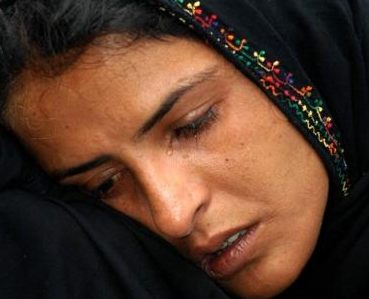
The president made his comments in an interview with the Washington Post on 13 September, incensing campaigners and others at home. "You must understand the environment in Pakistan. This has become a money-making concern," he said. "A lot of people say if you want to go abroad and get a visa for Canada or citizenship and be a millionaire, get yourself raped." In Karachi on Friday, 19 rights and advocacy groups vented their anger at the remarks, holding banners such as: "Who wants to be a millionaire - just get raped!" Sumar Mallah, a fisherman whose five-year-old daughter was raped and killed on 5 September, was at the rally. Mr Mallah said: "The police and the rapists have been insisting that I accept money and forget about my daughter. I will never settle for money. I want justice." Activist Fauzia Burney said: "General Musharraf's remarks are so shocking because they are so removed from reality."
Kal Aaj aur Kal (Abridged) Part 1/2 - Poem by Aitzaz Ahsan
URL: http://youtu.be/4PeOqHgvoDA
Kal Aaj aur Kal (Abridged) Part 2/2 - Poem by Aitzaz Ahsan
URL: http://youtu.be/ncxvGSdD0K4
Mukhtar Mai, who shot to world attention after being gang raped in 2002, allegedly on the orders of a village council or panchayat, earlier told the BBC: "I offer all the riches I've made out of the panchayat-enforced gang-rape to the president in return for justice." The Women's Action Forum described the president's comments as "outrageous". Last week President Musharraf told a conference on violence against women in Islamabad that Pakistan should not be singled out for its treatment of women. He also lashed out at rights groups for their role in highlighting cases such as Ms Mai's outside the country. Leading rights groups called the conference a "farce". The president's critics say he pays only lip service to cracking down on the abuse of women, hundreds of whom are raped and murdered every year in so-called honour cases in Pakistan. Despite government protestations that it is doing much to help women, many of those who try to register cases of rape and violence find it as hard as ever to do so, campaigners say. REFERENCE: Outrage at Musharraf rape remarks Last Updated: Friday, 16 September 2005, 13:55 GMT 14:55 UK http://news.bbc.co.uk/2/hi/south_asia/4251536.stm
MULTAN: A Pakistani victim of a village council-sanctioned gang-rape, who became a symbol of the country’s oppressed women, said on Thursday her life was in danger after the Supreme Court acquitted 13 men accused of the crime. Mukhtaran Mai was attacked on the orders of a village council in 2002 as a punishment because her brother – who was 12 at the time – was judged to have offended the honour of a powerful clan by allegedly having an affair with one of its women. Mai was an illiterate villager at the time but she defied taboos and shot to global fame by speaking out about her ordeal and taking her attackers to court. Mai had accused 14 men of being involved in raping her and in 2002, a court sentenced six of them to death while acquitting the others citing a lack of evidence. But in an appeal, the Lahore High Court not only upheld the eight acquittals but also overturned five of the six convictions. The death penalty for the sixth man, Abdul Khaliq, was commuted to life in prison. Mai appealed to the Supreme Court in 2005 but it rejected her appeal on Thursday, said Gohar Ali Shah, a lawyer for Mai.
Capital Talk (15th June 07) Part - 1

“I’m disappointed. Why was I made to wait for five years if this decision was to be given?” a sobbing Mai told Reuters by telephone from her village in the eastern province of Punjab shortly after the court announced the decision. “The accused can kill me and my family when they return home,” Mai said. Her courage in defying centuries-old rural customs of repressing women won her human rights awards and made her a role model for many women in Pakistan. She is running a school for girls in her village with donations from the government and supporters at home and abroad. Mai said she would neither flee her village nor the country. “Life and death are in the hands of Allah … I will not shut my school and other projects,” she said. The group Human Rights Watch expressed dismay at the court decision, saying the attack on Mai was a “crime that took place in full public view and the perpetrators were publicly identified”.
Capital Talk (15th June 07) Part - 2

“Today’s verdict by the Supreme Court of Pakistan on the Mukhtaran Mai case reflects poorly on the Supreme Court,” said Ali Dayan Hasan of the US-based rights group. He said Human Rights Watch was particularly concerned about Mai’s safety and called upon on the government to ensure her protection. “This is a setback for Mukhtaran Mai, the broader struggle to end violence against women and the cause of an independent, rights-respecting judiciary in Pakistan.” Mai said the 14 men involved in her rape were: Faiz Bukhsh Mastoi, Ramzan Pachar, Ghulam Fareed Mastoi, Allah Ditta Mastoi, Hazoor Bakhsh, two men both named Fayyaz Hussain, Aslam, Nazar Hussain, Ghulam Qasim, Hafiz Rasool Bakhsh, Ghulam Hussain, Mohammad Khalil and Abdul Khaliq. REFERENCE: Pakistan court acquits suspects in Mukhtaran Mai caseReuters April 21, 2011 (2 days ago) http://www.dawn.com/2011/04/21/supreme-court-upholds-lhc%E2%80%99s-verdict-in-mukhtaran-mai-case.html
Aitzaz Ahsan Crushing the Musharaf on EmergencyOver 70 percent of women in jail in Pakistan report sexual abuse by police officials. Despite the high incidence of rape and sexual torture of female detainees, no police official has been subjected to criminal punishment for these abuses. Moreover even basic protections -- including requirements that female detainees be interrogated only in the presence of a female officer are routinely violated. Over 60 percent of women prisoners in Pakistan are detained under the Hudood Ordinance, penal laws prohibiting sex outside of marriage, which have had a devastating impact on women's rights. In some cases women have been imprisoned because they were unable to prove a rape charge and were thus charged with impermissible sex and imprisoned pending trial. Double Jeopardy, co-authored by the Women's Rights Project and Asia Watch, documents many cases of women who have been victims of Pakistan's discriminatory legal system and of police abuses and also makes recommendations to the government of Pakistan to end these abuses. REFERENCE: Double Jeopardy Police Abuse of Women in Pakistan MAY 1, 1992 http://www.hrw.org/en/reports/1992/05/01/double-jeopardy
URL: http://www.youtube.com/watch?v=pynroVLZ0bY

The situation of women in Pakistan is by no means uniform. Conditions vary depending on geographical location and class, with the situation of women better in urban and middle- and upper-class sections of society, where there are greater opportunities for higher education and for paid and professional work, and women's social mobility is somewhat less restricted. (58) However, despite the relative advantages of women in some sectors, women from all walks of life in Pakistan remain second class citizens. Both the 1985 report of the Pakistan Commission on the Status of Women and the government's Sixth Five Year Development Plan (1988-1993) denounced the systematic discrimination that all Pakistani women face as a result of social and cultural norms and attitudes, as well as the "crippling handicaps of illiteracy, constant motherhood and poor health." (59) The 1985 report by the government-sponsored Commission concluded that "the average rural woman of Pakistan is born in near slavery, leads a life of drudgery and dies invariably in oblivion." (60) Seventy-five percent of Pakistan's female population of over fifty million is rural. (61) The average rural woman works 16 to 18 hours a day and will bear eight children in her lifetime. Approximately 80 percent of all pregnant and nursing women suffer from malnutrition. (62) Every year approximately 26,000 women die from complications due to childbirth and the general mortality rate of women is higher than that of men. The vast majority of women live in utter poverty and only 4.8 percent participate in the official labor force. Pakistan has one of the lowest female literacy rates in the world; only 16 percent of the female population can be said to be functionally literate, compared to 35.1 percent for men. (63) REFERENCE: Double Jeopardy Police Abuse of Women in Pakistan http://www.hrw.org/legacy/reports/1992/pakistan/ Double Jeopardy Police Abuse of Women in Pakistan http://www.hrw.org/en/reports/1992/05/01/double-jeopardy
Capital Talk (15th June 07) Part - 3

Capital Talk (15th June 07) Part - 4

Capital Talk (15th June 07) Part - 5

Despite the social and economic hardships and discrimination suffered by the vast majority of Pakistan's women today, women did benefit from the social and political reforms that accompanied Pakistan's independence movement. As early as 1917, a group of women in India organized for improved educational opportunities and the right to vote for women. The colonial administration initially rejected the demand for the female franchise. But by 1935, with India's two major nationalist parties, the All-India Muslim League and the Indian National Congress, having joined the demand, women "with the requisite property and educational qualifications" -- the same restrictions imposed on men -- were granted the franchise. Moreover, for the first time, women were guaranteed 6 out of a total of 150 seats in the Council of State and 9 out of 250 seats in the Federal Assembly. (64) Women's participation in public life advanced so markedly during this period that by December 1938, the All-India Muslim Women's League had branches all over the country. How much progress women have been able to achieve in Pakistan has depended to a large extent on the political expediencies of the moment.
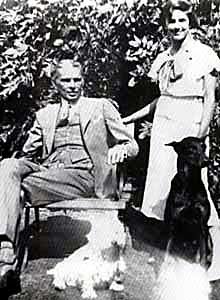
In the 1930s, before the partition of Pakistan and India, women played a central role in the Muslim League's efforts, under the leadership of Mohammed Ali Jinnah, to create a separate Muslim state. In 1944, Jinnah told a gathering at Aligarh University: No nation can rise to the heart of its glory unless your women are side by side with you. We are victims of evil customs. It is a crime against humanity that our women are shut up within four walls of the houses as prisoners. There is no sanction anywhere for the deplorable condition in which our women have to live. You should take your women along with you as comrades in every sphere of life. (65) Women galvanized popular support for the Muslim League, participated in public rallies and gatherings, and turned out in large numbers to vote in the 1945-46 elections. According to sociologist Farida Shaheed, "from 1940 to 1947 unprecedented numbers of women young and old from all classes broke the unwritten rules of conduct prescribed by purdah [seclusion of women]." (66) Women's participation was crucial in advancing the crusade by India's Muslim minority for an independent Pakistan, and they became an important symbol for the progressive forces within the All-India Muslim League advocating for a new nation. (67) REFERENCE: Double Jeopardy Police Abuse of Women in Pakistan http://www.hrw.org/legacy/reports/1992/pakistan/ Double Jeopardy Police Abuse of Women in Pakistan http://www.hrw.org/en/reports/1992/05/01/double-jeopardy
Aitzaz Ahsan Lawyers Movement Singing - Mar 3, 2009URL: http://youtu.be/q9LLwAPMdaw
The Great Debate & Kasuri (GEO TV 2007)

 LAHORE: President Supreme Court Bar Association (SCBA) Asma Jahangir has criticised the Apex Court judgment in the Deedar Hussain Shah case, saying the suggestion made in it for consultation with the Chief Justice of Pakistan (CJP) for the appointment of the National Accountability Bureau chairman amounts to legislation by the bench and the striking down of the 19th amendment to the constitution. Addressing a press conference here on Tuesday, the SCBA president said the judgment is vague since it has suggested consultation with the CJP by the executive, though it stopped short of making this a law. She appreciated the ruling of the bench suggesting consensus-oriented consultation between the leader of the House and the leader of the Opposition, saying parliament needs to put its act together so as to avoid interference from other institutions. Asma Jahangir said suggesting consultation with the CJP by the executive for the appointment of the NAB chief is highly objectionable, as it would leave no room for arbitration for the judiciary, which is the ultimate forum for justice. Furthermore she said, the SCBA would resist any such move in which the office of the CJP was asked to play a role meant solely for the executive through parliamentary consultation. REFERENCE: SCBA slams SC judgement in NAB chief case Wednesday, March 30, 2011 http://www.dailytimes.com.pk/default.asp?page=2011\03\30\story_30-3-2011_pg1_8
She said a member of the bench that had passed the verdict had shed crocodile’s tears while consoling Deedar Hussain Shah, as it had to act against a brother judge. Asma Jahangir said the judiciary of Pakistan has a long history of acting against brother judges and the way it has insinuated and conducted contempt of court proceeding against ‘brother judges’ is unprecedented in the judicial history of the country. She said the SC judgment in the Deedar Hussain Shah case is not one celebrated by the Bar and contains lacunae that need to be addressed. Talking about the six-member bench verdict for striking down the parliamentary committee recommendations on the extension in service of six superior court judges, Asma Jahangir warned that the turf war between institutions was bound to get dangerous, implying that the judiciary has acted unwisely since it has for all practical purposes struck down the 19th amendment to the constitution. She said the consensus verdict had in fact decided the matter on the 19th amendment pending before a larger bench of the Apex Court and hailed a dissenting note to this effect by Justice Tariq Pervaiz, one of the members of the same bench. Asma Jahangir said the Judicial Commission has not only rendered the recommendations of the parliamentary committee ineffective, but has also made the CJP the sole authority of elevating judges to the superior judiciary. She said the observations made by the Chief Justices of the Sindh and Lahore High Courts had been unnecessarily ignored. REFERENCE: SCBA slams SC judgement in NAB chief case Wednesday, March 30, 2011 http://www.dailytimes.com.pk/default.asp?page=2011\03\30\story_30-3-2011_pg1_8
Ali Ahmad Kurd's famous address to Supreme court bar(part 1)

LAHORE: Judges of the higher judiciary are making up their minds about cases after reading newspaper headlines and watching TV shows, former president Supreme Court Bar Association (SCBA) Ali Ahmed Kurd said on Tuesday. Describing the present situation as “justice hurry and justice worry”, Kurd deplored the fact that the judges were visiting and addressing the bars and said they would have to “prove themselves worthy of their positions”. According to Kurd, judges in the United States neither read newspapers nor watched TV programmes, but focused only on their work. – ISLAMABAD: Ali Ahmed Kurd, the firebrand leader of the lawyers’ movement and former president of the Supreme Court Bar Association, who has been keeping quiet for quite some time, surprised a lot of people on Tuesday with his blunt criticism of the way the Supreme Court was behaving. Judges should “behave like judges”, he said. Speaking during a talk show on “Challenges facing the judiciary”, he said that people had reservations about the verdict handed down by the Supreme Court on petitions challenging the National Reconciliation Ordinance.According to him, the judgment appeared to be based on newspaper headlines and talk shows of private TV channels. REFERENCE: Kurd unhappy over SC verdict on NRO By Iftikhar A. Khan Wednesday, 23 Dec, 2009 http://www.dawn.com/wps/wcm/connect/dawn-content-library/dawn/the-newspaper/national/12-kurd-unhappy-over-sc-verdict-on-nro%E2%80%93bi-09 Judges deciding cases on media lines: Kurd Daily Times Monitor Wednesday, December 23, 2009 http://dailytimes.com.pk/default.asp?page=2009\12\23\story_23-12-2009_pg7_12


ججز کیس کو ختم کرنےکو زیادہ اہمیت دے رہے ہوتے ہیں بجائے اس کی کہ انصاف کی فراہمی کی جائے:علی احمد کرد
سپریم کورٹ بار ایسوسی ایشن کے صدر علی احمد کُرد کا کہنا ہے کہ عدلیہ کی آزادی کے باوجود ابھی تک کچھ نہیں بدلا اور حالات اُسی طرح کے ہی ہیں جو نو مارچ سنہ دو ہزار سات سے پہلے تھے۔
علی احمد کرد نے عدالتی سال شروع ہونے کی تقریب سے خطاب کرتے ہوئے کہا کہ ایسا محسوس ہوتا ہے کہ ’فرعونوں‘ کےسامنے پیش ہو رہے ہوتے ہیں جو کیس کو ختم کرنےکو زیادہ اہمیت دے رہے ہوتے ہیں بجائے اس کے کہ انصاف کی فراہمی کی جائے۔
انہوں نے مزید کہا کہ یہی رویہ نو مارچ سنہ دوہزار سات سے قبل اعلٰی عدلیہ کے ججوں سے لےکر مقامی عدالتوں کے ججوں کا تھا۔
واضح رہے کہ سابق ملٹری ڈکٹیٹر جنرل ریٹائرڈ پرویز مشرف نے نو مارچ کو چیف جسٹس افتخار محمد چوہدری کے خلاف سپریم جوڈیشل کونسل میں ریفرنس بھیجا تھا۔
انہوں نے مزید کہا کہ یہی رویہ نو مارچ سنہ دوہزار سات سے قبل اعلٰی عدلیہ کے ججوں سے لےکر مقامی عدالتوں کے ججوں کا تھا۔
واضح رہے کہ سابق ملٹری ڈکٹیٹر جنرل ریٹائرڈ پرویز مشرف نے نو مارچ کو چیف جسٹس افتخار محمد چوہدری کے خلاف سپریم جوڈیشل کونسل میں ریفرنس بھیجا تھا۔
ماتحت عدالتوں کے فیصلوں کے خلاف ایک سو پچاس کے قریب پٹیشنز ریلیف کے لیے دائر کی جاتی ہیں جس میں سے بہت کم کو سول یا فوجداری اپیلوں میں تبدیل کردیا جاتا ہے جبکہ باقی رد کردی جاتی ہیں
علی احمد کرد
یہ پہلی مرتبہ ہے کہ ججوں کی بحالی کی تحریک کی کامیابی کے بعد وکلاء کے کسی سرکردہ رہنما نے کُھل کر ججوں کے رویے کے بارے میں تنقیدی کلمات کہے ہیں۔
علی احمد کُرد نے کہا کہ ججوں کی بحالی کے لیے شروع کی جانے والی تحریک میں نہ صرف وکلاء نے ان کا ساتھ دیا بلکہ سول سوسائٹی اور انسانی حقوق کی تنظیموں نے بھی اس میں بڑھ چڑھ کر حصہ لیا۔
انہوں نے کہا کہ اس تحریک میں وکلاء نے اپنی قیمتی جانوں کے نذرانے بھی پیش کیے۔ سپریم کورٹ بار کے صدر کا کہنا تھا کہ لوگ اُن سے یہی سوال پوچھتے ہیں کہ اس تحریک کی کامیابی کے کیا اثرات سامنے آئے ہیں۔
انہوں نے کہا کہ مشاہدے میں آیا ہے کہ وکلاء نے جو پٹیشنز دائر کی تھیں اُن میں سے بہت کم درخواستوں کو دیوانی یا فوجداری اپیلوں میں تبدیل کیاگیا ہے۔ انہوں نے کہا کہ ماتحت عدالتوں کے فیصلوں کے خلاف ایک سو پچاس کے قریب پٹیشنز ریلیف کےلیے دائر کی جاتی ہیں جس میں سے بہت کم کو سول یا فوجداری اپیلوں میں تبدیل کردیا جاتا ہے جبکہ باقی رد کردی جاتی ہیں۔
علی احمد کُرد کا کہنا تھا کہ وکلاء ذمہ دار افراد ہیں اور کوئی بھی یہ نہیں چاہے گا کہ کوئی ایسی بےمقصد پٹیشن دائر کی جائے جس سے عدالت کا قیمتی وقت ضائع ہو۔ انہوں نے کہا کہ عدالت کا یہ فرض ہے کہ وہ وکلاء کو تحمل کے ساتھ سنے۔
’عدلیہ کی آزادی کے باوجود کچھ نہیں بدلا‘
http://www.bbc.co.uk/urdu/pakistan/2009/09/090907_kurd_hit_judiciary_rr.shtml
Monday, 7 September, 2009, 12:58 GMT 17:58 PST
علی احمد کُرد نے کہا کہ ججوں کی بحالی کے لیے شروع کی جانے والی تحریک میں نہ صرف وکلاء نے ان کا ساتھ دیا بلکہ سول سوسائٹی اور انسانی حقوق کی تنظیموں نے بھی اس میں بڑھ چڑھ کر حصہ لیا۔
انہوں نے کہا کہ اس تحریک میں وکلاء نے اپنی قیمتی جانوں کے نذرانے بھی پیش کیے۔ سپریم کورٹ بار کے صدر کا کہنا تھا کہ لوگ اُن سے یہی سوال پوچھتے ہیں کہ اس تحریک کی کامیابی کے کیا اثرات سامنے آئے ہیں۔
انہوں نے کہا کہ مشاہدے میں آیا ہے کہ وکلاء نے جو پٹیشنز دائر کی تھیں اُن میں سے بہت کم درخواستوں کو دیوانی یا فوجداری اپیلوں میں تبدیل کیاگیا ہے۔ انہوں نے کہا کہ ماتحت عدالتوں کے فیصلوں کے خلاف ایک سو پچاس کے قریب پٹیشنز ریلیف کےلیے دائر کی جاتی ہیں جس میں سے بہت کم کو سول یا فوجداری اپیلوں میں تبدیل کردیا جاتا ہے جبکہ باقی رد کردی جاتی ہیں۔
علی احمد کُرد کا کہنا تھا کہ وکلاء ذمہ دار افراد ہیں اور کوئی بھی یہ نہیں چاہے گا کہ کوئی ایسی بےمقصد پٹیشن دائر کی جائے جس سے عدالت کا قیمتی وقت ضائع ہو۔ انہوں نے کہا کہ عدالت کا یہ فرض ہے کہ وہ وکلاء کو تحمل کے ساتھ سنے۔
’عدلیہ کی آزادی کے باوجود کچھ نہیں بدلا‘
http://www.bbc.co.uk/urdu/pakistan/2009/09/090907_kurd_hit_judiciary_rr.shtml
Monday, 7 September, 2009, 12:58 GMT 17:58 PST
Ali Ahmad Kurd's famous address to Supreme court bar(part 2)

 Right after the resignation of General Musharraf from the Post of the President of Pakistan, Mr. Athar Minallah the Chief Spokesman of the then defunct Defunct Chief Justice Iftikhar Mohammad Chaudhary in Private Pakistani TV Channel [AAJ], demanded Treason Trial under article 6 of 1973 Constitutiuon of Islamic Republic of Pakistan while shamelssly forgetting that Athar Minallah, also served in the Musharraf cabinet for two years. Shouln’t Mr Athar Minallah be brought to Justice as well because abetting in a crime is tantamount to committing a crime. Athar was appointed Minister for Law, Local Government, Parliamentary Affairs and Human Rights by the Provincial Government of NWFP (2000-2002) by General Musharraf Military Regime. Athar Minallah joined the prestigious Civil Service of Pakistan (CSP) and after serving for 10 years left the post of Additional Collector Customs to join the firm as a partner. Athar Minallah brings not only rich taxation experience but also valuable scholastic input. Athar completed his law degree from the International Islamic University (Islamabad) and his LLM from University of Cambridge, UK. And his areas of interest are taxation, judicial review, Athar was appointed Minister for Law, Local Government, Parliamentary Affairs and Human Rights by the Provincial Government of NWFP (2000-2002). He also was the member of the Task Force constituted by the Federal Government for revamping the Taxation regime in Pakistan. Currently he is the member of the Policy Board of Intellectual Property of Pakistan and Chairman of Alternate Dispute Resolution Committee (ADRC) for Sales Tax constituted by the Central Board of Revenue.
Judicial Dictatorship & Lawyers - Part - 1 (GEO 22 Dec 2009)
URL: http://www.youtube.com/watch?v=kbTD-ZtDPkg
PCO JUDGES VALIDATED MARTIAL LAW OF MUSHARRAF [History as reported by Daily Dawn]
![[Musharraf-Iftikhar.jpg]](https://blogger.googleusercontent.com/img/b/R29vZ2xl/AVvXsEj0jT7ElmC18z1hgm2As4D9_kKWIwkFqomV-8c16IQO0AQA7cuRXjOrdUR1VKSgaWYQf9TBvtplSpwFcMGjREOp0dyKEjvhHMtrrVd-gaLN3U-lo14fekIHAADPF2HqwXsaSqfIXaqTS5w1/s1600/Musharraf-Iftikhar.jpg) Chaudhry Iftikhar named new CJ [Daily Dawn 2005] By Our Staff Reporter ISLAMABAD, May 7: President Pervez Musharraf on Saturday appointed Justice Iftikhar Mohammad Chaudhry, the senior most judge of the Supreme Court, as the next chief justice. He will assume the office on June 30 after retirement of the incumbent Chief Justice, Justice Nazim Hussain Siddiqui, on June 29. “The notification has ended speculations of appointment of a junior judge as chief justice in violation of the seniority principle settled under the 1996 Judges case,” commented a senior Supreme Court lawyer on condition of anonymity. Justice Chaudhry will reach the superannuation age of 65 years in 2012, which will make him one of the longest serving chief justices in the judicial history of Pakistan. He will serve as chief justice for over seven years. Earlier Justice A. R. Cornelius and Justice Mohammad Haleem served as chief justice for eight years from 1960 to 68 and 1981 to 89, respectively. Justice Chaudhry was elevated as a judge of the apex court on February 4, 2000. He has performed as acting chief justice from January 17 to 29, 2005. He holds the degree of LLB and started practice as an advocate in 1974. Later he was enrolled as an advocate of high court in 1976 and as an advocate of Supreme Court in 1985. In 1989, Justice Chaudhry was appointed as advocate-general of Balochistan and elevated to the post of additional judge in the Balochistan High Court in 1990. He also served as banking judge, judge of Special Court for Speedy Trials and Customs Appellate Courts as well as company judge. He served as the chief justice of the Balochistan High Court from April 22, 1999 to February 4, 2000. He was elected the president of the High Court Bar Association, Quetta, and twice a member of the Bar Council. He was appointed as the chairman of the Balochistan Local Council Election Authority in 1992 and for a second term in 1998. Justice Chaudhry also worked as the chairman of the Provincial Review Board for Balochistan and was appointed twice as the chairman of the Pakistan Red Crescent Society, Balochistan. Presently he is functioning as the chairman of the Enrolment Committee of the Pakistan Bar Council and Supreme Court Buildings Committee. Reference: Caudhry Iftikhar named new CJ By Our Staff Reporter May 8, 2005 Sunday Rabi-ul-Awwal 28, 1426 http://www.dawn.com/2005/05/08/top4.htm
Chaudhry Iftikhar named new CJ [Daily Dawn 2005] By Our Staff Reporter ISLAMABAD, May 7: President Pervez Musharraf on Saturday appointed Justice Iftikhar Mohammad Chaudhry, the senior most judge of the Supreme Court, as the next chief justice. He will assume the office on June 30 after retirement of the incumbent Chief Justice, Justice Nazim Hussain Siddiqui, on June 29. “The notification has ended speculations of appointment of a junior judge as chief justice in violation of the seniority principle settled under the 1996 Judges case,” commented a senior Supreme Court lawyer on condition of anonymity. Justice Chaudhry will reach the superannuation age of 65 years in 2012, which will make him one of the longest serving chief justices in the judicial history of Pakistan. He will serve as chief justice for over seven years. Earlier Justice A. R. Cornelius and Justice Mohammad Haleem served as chief justice for eight years from 1960 to 68 and 1981 to 89, respectively. Justice Chaudhry was elevated as a judge of the apex court on February 4, 2000. He has performed as acting chief justice from January 17 to 29, 2005. He holds the degree of LLB and started practice as an advocate in 1974. Later he was enrolled as an advocate of high court in 1976 and as an advocate of Supreme Court in 1985. In 1989, Justice Chaudhry was appointed as advocate-general of Balochistan and elevated to the post of additional judge in the Balochistan High Court in 1990. He also served as banking judge, judge of Special Court for Speedy Trials and Customs Appellate Courts as well as company judge. He served as the chief justice of the Balochistan High Court from April 22, 1999 to February 4, 2000. He was elected the president of the High Court Bar Association, Quetta, and twice a member of the Bar Council. He was appointed as the chairman of the Balochistan Local Council Election Authority in 1992 and for a second term in 1998. Justice Chaudhry also worked as the chairman of the Provincial Review Board for Balochistan and was appointed twice as the chairman of the Pakistan Red Crescent Society, Balochistan. Presently he is functioning as the chairman of the Enrolment Committee of the Pakistan Bar Council and Supreme Court Buildings Committee. Reference: Caudhry Iftikhar named new CJ By Our Staff Reporter May 8, 2005 Sunday Rabi-ul-Awwal 28, 1426 http://www.dawn.com/2005/05/08/top4.htm Judicial Dictatorship & Lawyers - Part - 2 (GEO 22 Dec 2009)
URL: http://www.youtube.com/watch?v=e9Igv1kg5gU

LAHORE, June 27: The Lahore High Court summarily dismissed three writ petitions challenging the assumption of the President's office by Chief Executive Pervez Musharraf. The petitions were filed by Advocates MD Tahir, Amir Sohail and Hanif Tahir. The first-mentioned two argued at some length while the last-mentioned told Justice Khalilur Rahman Ramday, who heard the petitions, that he had reservations about him on account of his pro-government sympathies but would, instead of seeking transfer, leave the matter to his conscience. Advocate MD Tahir said frequent military interventions, prompted by politicians and invariably condoned and validated by the judiciary, have greatly damaged Pakistan in all spheres of life. Advocate Amir Sohail submitted that the Supreme Court recognized Gen Pervez Musharraf as chief executive for three years and his elevation to the office of President was repugnant to the SC judgment in Zafar Ali Shah's case. Under the judgment and the provisional constitution order validated by it the country is to be governed as nearly as possible in accordance with the provisions of the 1973 Constitution. Mr Rafiq Tarar could not have been removed except by impeachment. Justice Ramday observed that the 1973 Constitution was in existence by virtue of the PCO as amended from time to time and dismissed the three petitions. REFERENCE: LHC rejects pleas against Musharraf's presidency Staff Reporter DAWN WIRE SERVICE Week Ending : 30 June 2001 Issue : 07/26 http://www.lib.virginia.edu/area-studies/SouthAsia/SAserials/Dawn/2001/jun3001.html#lhcr
URL: http://youtu.be/S7VBbtAyPWE
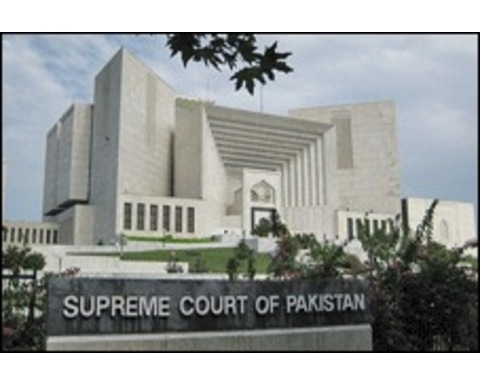
ISLAMABAD, Feb 2: The government elevated five judges to the Supreme Court on Wednesday. According to a notification, the president has appointed Justice Rashid Aziz, Chief Justice, Lahore High Court; Justice Nazim Hussain Siddiqui, Chief Justice Sindh High Court; Justice Iftikhar Mohammad Chaudhry, Chief Justice, Balochistan High Court; Qazi Farooq, former chief justice of Peshawar High Court; and Justice Rana Bhagwan Das, judge, Sindh High Court, judges of the Supreme Court. After the elevation of Justice Rashid Aziz Khan to the SC, Justice Mohammad Allah Nawaz has been appointed Chief Justice of Lahore High Court. Justice Deedar Hussain Shah has been appointed Chief Justice of Sindh High Court and Justice Javed Iqbal Chief Justice of Balochistan High Court. After these appointments, the number of SC judges has risen to 12, leaving five posts vacant. REFERENCE: Five judges elevated to SC Bureau Report DAWN WIRE SERVICE Week Ending : 5 February 2000 Issue : 06/05 http://www.lib.virginia.edu/area-studies/SouthAsia/SAserials/Dawn/2000/05feb00.html#five
Judicial Dictatorship & Lawyers - Part - 4 (GEO 22 Dec 2009)
URL: http://youtu.be/oPAn4TC1se8
ISLAMABAD, April 25: President Mohammad Rafiq Tarar on Tuesday appointed five judges to the Supreme Court of Pakistan. With the appointment of these judges, the strength of the Supreme Court judges, i.e. 17, stands completed. The newly-appointed judges include Justice Mian Mohammad Ajmal, Chief Justice, Peshawar High Court; Justice Deedar Hussain Shah, Chief Justice, High Court of Sindh; Justice Javed Iqbal, Chief Justice, High Court of Balochistan; Justice Hamid Ali Mirza, judge, High Court of Sindh and Justice Abdul Hameed Dogar, judge, High Court of Sindh. These judges have been appointed to the SC from the date they respectively take upon themselves the execution of their offices as such judges. Following are the names of the judges of the Supreme Court according to their seniority:1. Justice Irshad Hassan Khan, Chief Justice of Pakistan,
2. Justice Mohammad Bashir Jehangiri,
3. Justice Sheikh Ijaz Nisar,
4. Justice Sheikh Riaz Ahmed,
5. Justice Ch. Mohammad Arif,
6. Justice Munir A. Sheikh,
7. Justice Abdul Rehman Khan
8. Justice Rashid Aziz Khan,
9. Justice Nazim Hussain Siddiqi,
10. Justice Iftikhar Mohammad Chaudhry,
11. Justice Qazi Mohammad Farooq,
12. Justice Rana Bhagwan Das,
13. Justice Mian Mohammad Ajmal,
14. Justice Deedar Hussain Shah,
15. Justice Javed Iqbal,
16. Justice Hamid Ali Mirza,
17. Justice Abdul Hameed Dogar.-APP
REFERENCE: Supreme Court judges' strength completed DAWN WIRE SERVICE Week Ending : 29 April 2000 http://www.lib.virginia.edu/area-studies/SouthAsia/SAserials/Dawn/2000/apr29.html#supre
Judicial Dictatorship & Lawyers - Part - 5 (GEO 22 Dec 2009)
URL: http://youtu.be/C8KA5k6mAR0
Reality of Lawyers Movement in Pakistan.
"One wonders how an Incommunicado CJ was issuing statement often published in The New York Times/Washington Post and "successfully" telecast on CNN "during his days in Bastille"
URL: http://youtu.be/tkzkHS6WRSE
TAIL PIECE:
 Why do we forget that Lawyers Movement was basically a game to ease out Pakistan Army from the mess which was the creation General Pervez Musharraf and Military Establishment. CJ basically attained a lot from 2000 to 2007 [March to be precise]. I wonder how an Incommunicado CJ was issuing statement often published in The New York Times/Washington Post “during his days in Bastille” - [I still fail to understand that when CJ was sacked in March 2007, he and the press said the CJ is under house arrest and held incommunicado whereas the very next day Air Marshal [R] Asgher Khan “successfully” met him As per Daily Dawn dated March 12, 2007 Monday Safar 22, 1428

"ISLAMABAD, March 11: Chief Justice Iftikhar Mohammad Chaudhry has demanded that the Supreme Judicial Council (SJC) should hold open proceedings on the reference against him sent by President Gen Pervez Musharraf. This was stated by seasoned politician Air Marshal (retired) Asghar Khan after a meeting with Justice Chaudhry here on Sunday. The demand made by the suspended chief justice indicates that he is not ready to resign and is determined to contest the allegations levelled against him. - But one day earlier the CJ was held incommunicado - “There is no other way to describe the situation as no one is being allowed to meet him,” he said after police officials stopped him and other lawyers from going inside the chief justice’s residence. REFERENCES: Justice Iftikhar seeks open SJC proceedings: Asghar By Iftikhar A. Khan March 12, 2007 Monday Safar 22, 1428 http://www.dawn.com/2007/03/12/top1.htm CJ held incommunicado; lawyers slam ‘arrest’ By Nasir Iqbal http://www.dawn.com/2007/03/11/top1.htm
Subscribe to:
Posts (Atom)


