Free Website Hosting
Showing posts with label Zia’s regime. Show all posts

Thursday, July 28, 2011

Are we innocent?

The world’s conscience. It has also posed some extremely tough questions for European societies, the world’s Muslims in general, and the people of Pakistan in particular.
Europe will do itself and the world at large great injustice and harm if it dismisses the matter as the isolated work of a deranged mind. It must look deep into the factors that led to Anders Behring Breivik’s reliance on perverted intelligence.
The unpardonable doings of Al Qaeda, the other so-called jihadists and Muslim megalomaniacs have certainly contributed to the spread of Islamophobia in Europe and other parts of the western world, but it would be wrong to limit the list of culprits to them. It may be necessary to probe the extent to which the tone and tenor of the war on terror may have contributed to the growth of both militancy in parts of the Muslim world and reckless Muslim-bashing in the West. The idea is not to shift blame from one party to another, it is only a plea for keeping the indigenous sources of terrorism in Europe also in mind.
The world cannot possibly forget the rise of European fascism that built its power by fanning racism and persecuting certain religious and ethnic communities (Jews and Blacks). Nazism is a disease many parts of Europe are still afflicted with. The Norwegian people themselves have had anxieties about neo-Nazi and other extreme-right gangs for more than a decade.
These facts make it necessary for European societies to take note of elements who may be exploiting the public sentiment against terrorists and immigrants to impose on them new and more horrible forms of right-wing tyranny.
The leaders of Islamic thought and Muslim public opinion on their part cannot shun reality by simply telling the Europeans to put their house in order. Nor can they get away by declaring that terrorists constitute a small minority among Islamic scholars and lay Muslims both, however true this statement may be.
They must not ignore the high percentage of Muslims among the terrorists, nor the flurry of edicts issued by recognised Muslim authorities that not only condone and justify acts of terrorism, including the killing of innocent people in suicide bombings, but also exhort the believers to take part in such acts and win a place in paradise.
Regardless of the degree of the Muslim people’s involvement in terrorism that their ulema and political leaders may be prepared to concede, they have a duty to contribute to a solution to the problems created by groups and individuals claiming to be soldiers of Islam. The most important fact to be realised by the Muslim peoples is that they and their next generations will be the biggest losers if the mischief spread by their fanatic fringe is not quickly suppressed.
The people of Pakistan have to do more soul-searching than others because Breivik has blamed this country as the cause of his heinous crime. They should be shocked because besides being a responsible promoter of peace in the world, Norway has consistently been good to Pakistan. For many years, Norway has been helping Pakistan significantly in all areas of economic development, electoral reform, education, culture, heritage, women’s empowerment and human rights. It has been fair and generous to Pakistani immigrants who have been able to achieve distinction in Norwegian society and have been remitting sizeable funds to Pakistan year after year.
All this makes it necessary for Pakistan to make sure that the people of Norway are not influenced by the vitriolic outpourings of Breivik and the like. The critical question is: are we innocent? Can we say that we the Pakistanis have done nothing to offer neo-Nazis or other right-wing extremists an excuse to go out and massacre people?
One of the greatest ironies in the Pakistani people’s collective behaviour is that while the state is engaged in a grim battle with militants in religious garb and we keep telling the world of the number of lives we have lost, Pakistan has never challenged the so-called jihadis at the intellectual or even theological level. On the contrary, state institutions, political parties and the media have been promoting, some of them partly and casually and others wholly and by design, accommodation with terrorists, if not outright collusion with them. Is this not grist to the mills of hate the neo-Nazis are running across the globe?
Breivik has made a distinction between Pakistani immigrants who have integrated themselves with their host communities and those who haven’t. There is a need to look at the conduct of the latter. There have been occasions when Pakistanis have shocked the Norwegian authorities and citizens by killing a woman for ‘honour’, by abducting and forcibly marrying their daughters against their will, and by cheating Norwegian and Pakistani girls. The Norwegians, or any other host society for that matter, will have cause to consider such crimes as an abuse of hospitality and brand the whole Pakistani community as a pack of criminals and swindlers.
There is also need to take a look at the doings of Pakistani visitors to Norway who claim to be on religious missions. We have seen the havoc done in England by the so-called religious preachers. They have divided Muslim immigrant communities, fought battles to capture mosques, exploited the credulous ones and set up extortion rackets. Are Pakistani missions in Europe charged with the task of monitoring such unsavoury activities or with taking steps to ensure that Pakistanis in European countries respect the hosts’ laws and culture instead of propagating their dreams of world conquest?
Recently, the Norwegian public was considerably incensed when one of their nationals, Ehsan Arjumandi, was picked up, allegedly by security agencies in Balochistan, and all efforts by the Norwegian government to have him recovered failed to elicit from Pakistani authorities a response the matter warranted. The publicity this case received in Norway could not have presented Pakistan and its people as friendly, or even responsible, actors. These matters not only bring a bad name to Pakistan, they frighten away investors and traders and materially affect its economic interests.
Of course, the agent of death on the small Norwegian island was not a Pakistani; nor were his weapons of Pakistani origin. But it is very difficult to say that Pakistanis have made no contribution towards making the world increasingly unsafe for the human family. Will history pronounce us innocent? Let all Pakistanis ponder and find a way to avoid being treated as international pariahs. There are quite a few lessons we may learn from the spirit of discipline and forbearance the Norwegian people have demonstrated in their hour of unmitigated tragedy.

Saturday, July 23, 2011

Pakistan’s identity crisis

Flawed and imaginary Arabized identity has become the biggest curse for Pakistani nation. The sickening ideologies emanated from this flawed identity are now posing grave threats to world peace and the very existence of the country itself 
“These walls are funny. First you hate 'em, then you get used to 'em. Enough time passes, you get so depended on them. That's institutionalized.” --Morgan Freeman as Red in Shawshank Redemption
Pakistan is the primary and worst victim of institutionalized falsehood. How ironic is the fact that the ‘fabrication gurus’ had to concoct so-called ‘Ideology of Pakistan” long after the inception of Pakistan. The chauvinistic and undemocratic mindset, right from the beginning, had a realization the powers will have to be conceded to people if a genuine democracy takes root in newly emerged state.
To keep a tight grip on power and to keep the masses enslaved, a mind control strategy was sought through systematic and institutionalized indoctrination by the crooks at helm of the affairs, especially feudal cum politicians and civil bureaucracy. At that particular time, the military and mullah were ‘dragged into game’ as junior partners, where the later was to act us ‘paid propagandist’ to divert people from real to ‘non-issues’.
The unscrupulous feudal cum politicians had to rely on the ‘muscle power’ of military while confronting the challenge of growing dissenting voices. Thus, it provided an opportunity to military establishment to take the plunge and modify its role from a ‘junior partner’ to a ‘big boss’.
The civil and military establishments both resorted in appeasing the mullah to consolidate their illegitimate regimes. Consequently, the mullah exploited the situation to advance his own agenda. This agenda was (is) based on pan-Islamism and it was the very reason that the mullah had opposed the separation of the Sub-continent earlier. Furthermore, he deemed it a perfect opportunity to avenge his earlier defeats.
However, it was not only typical mullah who played religious cards to advance his agenda. It was a great irony of the history that Mohammad Ali Jinnah, the founding father of the nation and a man with all the secular credentials and liberal in life style resorted in religious rhetoric to popularize his movement for a separate Muslim state. The history repeated itself when Zulfiqar Ali Bhutto, another man in modern outlook betrayed his progressive supporter and thus, opened ‘hell gates’ of extreme religiosity, inflicted on the people by then military dictator Gen. Zia.
While refusing to learn a lesson from the separation of Bangladesh which was also a big blow to the notion that religion can be a binding force of diverse ethnic and cultural groups, the Pakistani establishment thus intensified its institutionalized efforts of carving out a flawed and concocted identity of the country as well as its people.
The establishment was desperate to paint a false identity fearing that the flourishing democracy on the other side of the border may ultimately devour their hegemonic rule. The power hungry establishment was also aware of the fact that the religious euphoria could not really cater to the needs of the all ethnic and cultural groups living in its territory.
Therefore, it was decided to instill this false identity by means of all sorts of coercion and manipulation, including enactment of discriminatory and draconian laws against the minorities and women, changing curricula with infusion of hate speeches, violence and extremely bigoted and intolerant worldview and patronizing violent extremist religious groups.
Besides, the state initiated ruthless Arabization (as newly found identity) of society on the cost of the Baloch, Sindhi, Pashtoon, Punjabi, Saraiki and other indigenous identities. The new imposed Arabized identity had some distinct features i.e. 1-detachment from South Asia and attachment with Middle East, 2-self-hatred (showing distain towards South Asian ancestry and obsessed efforts of tracing genealogy in Arabia, Central Asia or Iran) and love for foreign invaders of the past and sympathies with global jihadists of the present.
Today, this flawed and imaginary Arabized identity has become the biggest curse for Pakistani nation. The sickening ideologies emanated from this flawed identity are now posing grave threats to world peace and the very existence of the country itself. But the people of Pakistan are still not ready to determine who their real enemy is. They are totally oblivious of the history of Sub-continent prior to Arabian invasion on this soil led by Mohammad bin Qasim.
This flawed identity is one of the biggest contributors in widespread confusion in the society about the real enemy. The people of Pakistan, in general, have developed sympathies for Jihadist terrorists as they have a feeling of shared identity with them. Thus, the nation is fighting this battle half heartedly. This identity crisis has produced a population which is falling fast into hypocrisy and double standards.
The people of Pakistan want to emulate Arabs in every sphere of life but at other hand, their social ethos, family system and values all are deeply rooted in their South Asian identity and they have a strange love-hate relationship with this identity. The collective guilt of living “immoral” or un-Islamic (on South Asian ethos) lives is pushing them towards more religiosity and thus more isolation and self-hatred.
As a result of this identity crisis, deliberate disconnect with the past, twisted and biased history and being part of illusionary ‘Umma’, majority of the Pakistanis are living in a state of deep confusion and denial. Thus, they resort in supremacist religious ideologies and glorification of the invaders, just to soothe their bruised but inflated egos. This persistent state of denial, bigotry and confusion is resulting as irrational, extreme and violent behaviors.
The inability to comprehend the concepts of a nation state, modernity, equality and pluralism has made the perplexed Pakistani nation incompatible with modern world. Hence, the only areas where they are far ahead of other nations are massive corruption, extremism, violence and terrorism. The feature scenario also seems bleak as any critical thinking is immediately threatened with life. There is a serious and dire need to revive local (South Asian) identities and to return to a pluralist society which has a history of thousands of years in the Sub-continent.
Shafqat Aziz a socio-political analyst based in Islamabad. He is founding member of the online community “Liberal Pakistan”.

Thursday, June 30, 2011

Is this Islam?

Tonight as we all know is the Lailatul Asra – night of the holy ascent and many mosques are decorated and the loud speakers are on the full volume. No doubt its good to listen to naat but not when one is forced to listen to them. I wonder whats wrong with these naat khwans and mullas that they do not fear ALLAH while they are reciting the Quran and praising the Prophet (Peace and blessings of ALLAH be upon him), they never think that they might not be pleasing their Lord by disturbing the peace of those who are old and sick and want to have a good night sleep or small children who can not sleep soundly as their ears are echoing with the sounds coming from these loud speakers – many times small innocent children get terrified when they get waken up by these mullas the moment they go to sleep.

Be it 12 rabi-ul-awal, shab emehraj and shab e barat these mulvis do not care about the rights of their neighbors, they do not care about the sick and those who want to have some rest. I wonder what type of Islam are they preaching. Who will be impressed by this? They are making people change their houses just because of these mosques. Is this the Islam that our holy Prophet Peace be upon him taught us about? Did not he asked us to care for the neighbours and respect their rights? Did he taught us about the sick and elders? Is this the kindness to the children?

It is none but these mullas and so called religious people who have tarnished the image of Islam and mosques in the entire world. Its the high time that we muslims should join to make the authorities to act strictly against such mosques where the loud speakers are used especially in the residential areas. I request the authorities to restrict the use of loud speakers unless it very necessary.

Tuesday, May 3, 2011

Fond of honor in beggars ........ ??????????

General Ashfaq Kayani runs this country. Let’s not waffle about on this issue. The democratic regime is anemic at best and hapless at worst. What he says carries weight. People listen to him.
When General K says that the nation will not sacrifice its honour for prosperity, he’s expecting people to take it at face value. An unquestioning media will accept it as essential, and will let it lie.
Now, there’s no doubt that honour, or ‘ghairat’ is real. Living your life with dignity and honour is the right of the people of Pakistan. Having their decisions actually count is the right of the people of Pakistan. On that front, I have no issue with his comment.
Similarly, General K is not the first (and he’s unlikely to be the last) Pakistani political personality to make this statement. Rhetoric laden with national honour stretches all the way back to the Two Nation Theory and has been employed by all our rulers. As was pointed out to me on Twitter, the greatest example of honour-over-prosperity rhetoric is ZAB’s infamous “Even if we have to eat grass” speech. It’s an essential, and cheap, political trope that excites people.
What is particularly egregious about this line of argument is that it somehow glorifies poverty, turning it into a virtue. Trying to convince the people of the country that toiling in subhuman conditions is a sacrifice they’re making to ensure that the nation remains honourable. It stakes the nation’s dignity at the cost of the individual Pakistani’s.
The fact that such rhetoric emanates from the military is particularly jarring for me. No single institution has sold out the nation’s “honour” for its own prosperity at the rate that the military has. And none has forced individual Pakistanis to live as undignified, fearful lives as it has.
The army has willingly taken on a mercenary role since the Soviet ‘Jihad’. It has willfully indoctrinated young boys to turn themselves into weapons; in the process snatching away sons from families that would have depended upon them to live a life of dignity in their old age.
The military has appropriated a larger and larger chunk of the national budget to buy itself fancy gadgets at the cost of expanding education and healthcare. Snatching from us the right to education and a healthy life.
And while they may talk of dismantling the feudal nizaam, they themselves have emerged as the largest landowner in Pakistan. Some dignity they’re affording us.
They’ve trampled on our vote time and again. They’ve murdered a Prime Minister through a kangaroo court. They have shown time and again that they care naught for the dignity of our vote.
They’ve treated Pakistanis as second class citizens simply due to their narrow definition of what ‘Pakistani’ is. Which for the uninitiated is basically “Love the army and listen to everything we say without fail.” A genocide in Bengal (yeah, let’s not sugarcoat it), and ongoing repression in Balochistan that barely makes it to our news channels.
In the meanwhile, we have our gleaming Defence Housing Authorities, and our vast Fauji Foundation industrial complex. It would appear that while we ensure the nation’s honour, someone is indeed getting prosperous.
So, General Kayani, allow me to be a little skeptical. Just a tiny bit skeptical when you ask me to forego prosperity for honour.

Tuesday, April 26, 2011

Terror’s Training Ground

By Ayesha Siddiqa
Openning09-09 
A few years ago, I met some young boys from my village near Bahawalpur who were preparing to go on jihad. They smirked politely when I asked them to close their eyes and imagine their future. “We can tell you without closing our eyes that we don’t see anything.”
It was not entirely surprising. South Punjab is a region mired in poverty and underdevelopment. There are few job prospects for the youth. While the government has built airports and a few hospitals, these projects are symbolic and barely meet the needs of the area. It’s in areas like this, amid economic stagnation and hopelessness, that religious extremists find fertile ground to plant and spread their ideology.
The first step is recruitment – and the methodology is straightforward. Young children, or even men, are taken to madrassas in nearby towns. They are fed well and kept in living conditions considerably better than what they are used to. This is a simple psychological strategy meant to help them compare their homes with the alternatives offered by militant organisations. The returning children, like the boys I met, then undergo ideological indoctrination in a madrassa. Those who are indoctrinated always bring more friends and family with them. It is a swelling cycle.
Madrassas nurturing armies of young Islamic militants ready to embrace martyrdom have been on the rise for years in the Punjab. In fact, South Punjab has become the hub of jihadism. Yet, somehow, there are still many people in Pakistan who refuse to acknowledge this threat.

Four major militant outfits, the Sipah-e-Sahaba Pakistan (SSP), Lashkar-e-Jhangvi (LeJ), Jaish-e-Mohammad (JeM) and Lashkar-e-Tayyaba (LeT), are all comfortably ensconced in South Punjab (see article “Brothers in Arms”). Sources claim that there are about 5,000 to 9,000 youth from South Punjab fighting in Afghanistan and Waziristan. A renowned Pakistani researcher, Hassan Abbas cites a figure of 2,000 youth engaged in Waziristan. The area has become critical to planning, recruitment and logistical support for terrorist attacks in Pakistan and Afghanistan. In fact, in his study on the Punjabi Taliban, Abbas has quoted Tariq Pervez, the chief of a new government outfit named the National Counter-Terrorism Authority (NCTA), as saying that the jihad veterans in South Punjab are instrumental in providing the foot soldiers and implementing terror plans conceived and funded mainly by Al-Qaeda operatives. This shouldn’t come as a surprise considering that the force that conquered Khost in 1988-89 comprised numerous South Punjabi commanders who fought for the armies of various Afghan warlords such as Gulbuddin Hikmatyar and Burhanuddin Rabbani. Even now, all the four major organisations are involved in Afghanistan.
The above facts are not unknown to the provincial and federal governments or the army. It was not too long ago that the federal Interior Minister Rehman Malik equated South Punjab with Swat. The statement was negated by the IG Punjab. Perhaps, the senior police officer was not refuting his superior but challenging the story by Sabrina Tavernese of The New York Times (NYT). The story had highlighted jihadism in South Punjab, especially in Dera Ghazi Khan. The NYT story even drew a reaction from media outlets across the country. No one understood that South Punjab is being rightly equated with Swat, not because of violence but due to the presence of elements that aim at taking the society and state in another direction.
An English-language daily newspaper reacted to the NYT story by dispatching a journalist to South Punjab who wrote a series of articles that attempted to analyse the existing problem. One of the stories highlighted comments by the Bahawalpur Regional Police Officer (RPO) Mushtaq Sukhera, in which he denied that there was a threat of Talibanisation in South Punjab. He said that all such reports pertaining to South Punjab were nothing more than a figment of the western press’s imagination. Many others express a similar opinion. There are five explanations for this.
Firstly, opinion makers and policy makers are in a state of denial regarding the gravity of the problem. Additionally, they believe an overemphasis on this region might draw excessive US attention to South Punjab – an area epitomising mainstream Pakistan. Thus, it is difficult even to find anecdotal evidence regarding the activities of jihadis in this sub-region. We only gain some knowledge about the happenings from coincidental accidents like the blast that took place in a madrassa in Mian Chunoon, exposing the stockpile of arms its owner had stored on the premises.
Del267762
Nothing is off limits: Militants attack the Sri Lankan cricket team in Lahore in March 2009.

Secondly, officer Sukhera and others like him do not see any threat because the Punjab-based outfits are “home-grown” and are not seen as directly connected to the war in Afghanistan. This is contestable on two counts: South Punjabi jihadists have been connected with the Afghan jihad since the 1980s and the majority is still engaged in fighting in Afghanistan.
Thirdly, since all these outfits were created by the ISI to support General Zia-ul-Haq’s Islamisation process, in essence to fight a proxy war for Saudi Arabia against Iran by targeting the Shia community, and later the Kashmir war, the officials feel comfortable that they will never spin out of control. Those that become uncontrollable, such as Al-Furqan, are then abandoned. This outfit was involved in the second assassination attempt on Musharraf and had initially broken away from the JeM after the leadership developed differences over assets, power and ideology. Thus, the district officials and intelligence agencies turned a blind eye to the killing of the district amir of Al-Furqan in Bahawalpur in May 2009. As far as the JeM is concerned, it continues its engagement with the establishment. In any case, groups that are partly committed to the Kashmir cause and confrontation with India continue to survive. This is certainly the perception about the LeT. But in reality, the Wahhabi outfit has also been engaged in other regions, such as the Afghan provinces of Kunar and Badakhshan since 2004.
Fourthly, there is confusion at the operational level in the government regarding the definition of Talibanisation, which is then reflected in the larger debate on the issue. Many, including the RPO, define the process as an effort by an armed group to use force to change the social conditioning in an area. Ostensibly, the militant outfits in the Punjab continue to coexist with the pirs, prostitutes and the drug mafia, and there is no reason that they will follow in the footsteps of Sufi Mohammad and Maulana Fazlullah, or Baitullah Mehsud. Since the authorities only recognise the pattern followed by the Afghan warlords or those in Pakistan’s tribal areas, they tend not to understand that what is happening in the Punjab may not be Talibanisation but could eventually prove to be as lethal as what they call Talibanisation.
Del273533
Finally, many believe that Talibanisation cannot take place in a region known for practicing the Sufi version of Islam. There are many, besides the Bahawalpur RPO, who subscribe to the above theory. A year ago in an interview with an American channel, Farahnaz Ispahani, an MNA and wife of Pakistan’s ambassador to Washington, Husain Haqqani, stated that extremism couldn’t flourish in South Punjab because it was a land of Sufi shrines. This is partially true. The Sufi influence would work as a bulwark against this Talibanisation of society. However, Sufi Islam cannot fight poverty, underdevelopment and poor governance – all key factors that encourage Talibanisation.
South Punjab boasts names such as the Mazaris, Legharis and Gilanis, most of whom are not just politicians and big landowners but also belong to significant pir families. But they have done little to alleviate the sufferings of their constituents. A visit to Dera Ghazi Khan is depressing. Despite the fact that the division produced a president, Farooq Khan Leghari, the state of underdevelopment there is shocking. Reportedly, people living in the area in the immediate vicinity of the Leghari tribe could not sell their land without permission from the head of the tribe, the former president, who has been the tribal chief for many years. Under the circumstances, the poor and the dispossessed became attractive targets for militant outfits offering money. The country’s current economic downturn could raise the popularity of militant outfits.
02Punjab_terror-09-09
In recent history, the gap created due to the non-performance of Sufi shrines and Barelvi Islam, or the exploitative nature of these institutions, has been filled partly by the Deobandi and Ahl-e-Hadith madrassa conversion teams and groups, such as the Tableeghi Jamaat, and militant outfits. This alternative, unfortunately, is equally exploitative in nature. Sadly, today the shrines and Barelvi Islam have little to offer in terms of “marketing” to counter the package deal offered by the Salafists for the life hereafter, especially to a shaheed: 70 hoors (virgins), a queen hoor (virgin queen), a crown of jewels and forgiveness for 70 additional people. This promise means a lot for the poor youth who cannot hope for any change in a pre-capitalist socio-economic and political environment, where power is hard to re-negotiate. Furthermore, as stated by the former information minister Mohammad Ali Durrani, who had been a jihadi from 1984-90, a poor youth suddenly turning into a jihadi commander is a tremendous story of social mobility and recognition that he would never get in his existing socio-economic system. More importantly, the Deobandis and Ahl-e-Hadith offer a textual basis for their package, which is difficult for the pirs to refute due to the lack of an internal religious discourse in the Islamic world. The modern generation of pirs has not engaged in an internal discourse to counter this ideological onslaught by the Salafis. The main belief of Salafism is that all Muslims should practice Islam as it was during the time of Prophet Muhammad. The religion at that time, according to them, was perfect. Salafism – which pre-dates Wahhabism – is often used interchangeably with Wahhabism, which is actually an extension of Salafism.
*  *  *
Punjab offers a different pattern of extremism and jihadism. The pattern is closer to what one saw in Swat, where Sufi Mohammad and his TNSM spent quite a few years indoctrinating the society and building up a social movement before they got embroiled in a conflict with the state. South Punjab’s story is, in a sense, like Swat’s in that there is a gradual strengthening of Salafism and a build-up of militancy in the area. The procedure of conversion though, dates back to pre-1947. Still, the 1980s were clearly a watershed, when both rabid ideology and jihad were introduced to the area. Zia-ul-Haq encouraged the opening up of religious seminaries that, unlike the more traditional madrassas that were usually attached with Sufi shrines, subscribed to Salafi ideology. In later years, South Punjab became critical to inducting people for the Kashmir jihad. The ascendancy of the Tableeghi Jamaat and such madrassas that presented a more rabid version of religion gradually prepared the ground for later invasion by the militant groups. Two reports prepared around 1994, firstly by the district collector Bahawalpur and later by the Punjab government, highlighted the exponential rise in the number of madrassas and how these fanned sectarian and ideological hatred in the province. These reports also stated that all of these seminaries were provided funding by the government through the zakat fund.
jem_ayesha
The number of seminaries had increased during and after the 1980s. According to a 1996 report, there were 883 madrassas in Bahawalpur, 361 in Dera Ghazi Khan, 325 in Multan and 149 in Sargodha district. The madrassas in Bahawalpur outnumbered all other cities, including Lahore. These numbers relate to Deobandi madrassas only and do not include the Ahl-e-Hadith, Barelvi and other sects. Newer estimates from the intelligence bureau for 2008 show approximately 1,383 madrassas in the Bahawalpur division that house 84,000 students. Although the highest number of madrassas is in Rahim Yar Khan district (559) followed by Bahawalpur (481) and Bahawalnagar (310), it is Bahawalpur in which the highest  number of students (36,000) is enlisted. The total number of madrassa students in Pakistan has reached about one million.
Visions of paradise: JeM supporters walk by a banner of jihadi art. Photo: Tariq Mahmood
Visions of paradise: JeM supporters walk by a banner of jihadi art. Photo: Tariq Mahmood, AFP.

Everyone has been so focused on FATA and the NWFP that they failed to notice the huge increase in religious seminaries in these districts of South Punjab. According to a study conducted by historian Tahir Kamran, the total number of madrassas in the Punjab rose from 1,320 in 1988 to 3,153 in 2000, an increase of almost 140%. These madrassas were meant to provide a rapid supply of jihadis to the Afghan war of the 1980s. At the time of 9/11, the Bahawalpur division alone could boast of approximately 15,000-20,000 trained militants, some of whom had resettled in their areas during the period that Musharraf claimed to have clamped down on the jihad industry. Many went into the education sector, opened private schools and even joined the media.
These madrassas play three essential roles. First, they convert people to Salafism and neutralise resistance to a more rabid interpretation of the Quran and Sunnah in society. Consequently, the majority of the Barelvis cannot present a logical resistance to the opposing ideology. In many instances, the Barelvis themselves get converted to the idea of jihad. Secondly, these madrassas are used to train youth, who are then inducted into jihad. Most of the foot soldiers come from the religious seminaries. One of the principles taught to the students pertains to the concept of jihad as being a sacred duty that has to continue until the end of a Muslim’s life or the end of the world. Lastly, madrassas are an essential transit point for the youth, who are recruited from government schools. They are usually put through the conversion process after they have attended a 21-day initial training programme in the Frontier province or Kashmir (see box “A Different Breed”).
State support, which follows two distinct tracks, is also instrumental in the growth of jihadism in this region. On the one hand, there has generally been a link or understanding between political parties and militant groups. Since political parties are unable to eliminate militants or most politicians are sympathetic towards the militants, they tend to curb their activities through political deal-making. The understanding between the SSP and Benazir Bhutto after the 1993 elections, or the alleged deal between the PML-N and the SSP during the 2008 elections, denote the relationship between major political parties and the jihadis. Currently, the SSP in South Punjab is more supportive of the PML-N.
The second track involves operational links between the outfits and the state’s intelligence apparatus. As mentioned earlier, some of the outfits claim to have received training from the country’s intelligence agencies. Even now, local people talk of truckloads of weapons arriving at the doorstep of the JeM headquarters and other sites in the middle of the night. While official sources continue to claim that the outfit was banned and does not exist, or that Masood Azhar is on the run from his hometown of Bahawalpur, the facts prove otherwise. For instance, the outfit continues to acquire real estate in the area, such as a new site near Chowk Azam in Bahawalpur, which many believe is being used as a training site. Although the new police chief has put restraints on the JeM and disallowed it from constructing on the site, the outfit continues to appropriate more land around the area. Junior police officials even claim seeing tunnels being dug inside the premises. The new facility is on the bank of the Lahore-Karachi national highway, which means that in the event of a crisis, the JeM could block the road as has happened in Kohat and elsewhere. Furthermore, the outfit’s main headquarters in the city is guarded by AK-47-armed men who harass any journalist trying to take a photograph of the building. In one instance, even a police official was shooed away and later intimidated by spooks of an intelligence agency for spying on the outfit. Despite the claim that the SSP, the LeJ and the JeM have broken ties with intelligence agencies and are now fighting the army in Waziristan, the fact remains that their presence in the towns of South Punjab continues unhindered.
Is it naivety and inefficiency on the part of officialdom or a deliberate effort to withhold information? The government claims that Maulana Masood Azhar has not visited his hometown in the last three years. But he held a massive book launch of his new publication Fatah-ul-Jawad: Quranic Verses on Jihad, on April 28, 2008, in Bahawalpur. Moreover, JeM’s armed men manned all entrances and exits to the city that day – and there was no police force in sight. The ISI is said to have severed its links with the JeM for assisting the Pashtoon Taliban in inciting violence in the country. Sources from FATA claim, however, that the JeM, Harkat-ul-Mujahideen (HuM) and LeT are suspected by the Taliban for their links with state agencies.
In addition, intelligence agencies reportedly ward off anyone attempting to probe into the affairs of these outfits. In one case, a local in Bahawalpur city invoked daily visits from a certain agency after he assisted a foreign journalist. Similarly, only six months back, a BBC team was chased out of the area by agency officials. In fact, intelligence officials, who had forgotten about my existence since my last book was published, revisited my village in South Punjab soon after I began writing on militancy in the area and have gone to the extent of planting a story in one of the Urdu newspapers to malign me in my own area. In any case, no serious operation was conducted against these outfits after the Mumbai attacks and the recent spate of violence in the country. Hence, all of them continue to survive.
The Deobandi outfits are not the only ones popular in South Punjab. Ahl-e-Hadith/Wahhabi organisations such as the Tehreek-ul-Mujahidden (TuM) and the LeT also have a following in the region. While TuM, which is relatively a smaller organisation, has support in Dera Ghazi Khan, the LeT is popular in Bahawalpur, Multan and the areas bordering Central Punjab. Headquartered in Muridke, the LeT is popular among the Punjabi and Urdu-speaking Mohajir settlers.
Punjab_terror-09-09
There are obvious sociological reasons for LeT’s relative popularity among these people. The majority of this population represents either the lower-middle-class farmers or middle-class trader-merchants. The middle class is instrumental in providing funding to these outfits. And the support is not confined to South Punjab alone. In fact, middle-class trader-merchants from other parts of the Punjab also feed jihad through their funding. This does not mean that there are no Seraiki speakers in Wahhabi organisations but just that the dominant influence is that of the Punjabis and Mohajirs. The Seraiki-speaking population is mostly associated with the SSP, LeJ and JeM, not to mention the freelancing jihadis that have direct links with the Tehrik-e-Taliban (TTP).
The LeT’s presence in South Punjab is far more obvious than others courtesy of the wall chalkings and social work by its sister outfit, the Jamaat-ud-Dawa. Despite the rumours of friction between the LeT and the JuD leadership, the two segments operate in unison in South Punjab. Three of the favourite areas of recruitment in South Punjab for all outfits are Cholistan in Bahawalpur, the Rekh in Dera Ghazi Khan, and the Kacha area in Rajanpur. The first two are desert areas known for their poverty and underdevelopment, while the third is known for dacoits. However, another known feature of Kacha in Rajanpur is that the clerics of the Lal Masjid come from this area and have partly managed to push back the dacoits. Local sources claim that the influence of the clerics has increased since they started receiving cooperation from the police to jointly fight the dacoits.
Organisations such as the LeT have even begun to recruit women in the Punjab. These women undergo 21 days of ideological and military training. The goal is to ensure that these women will be able to fight if their menfolk are out on jihad and an enemy attacks Pakistan.
The militant outfits are rich, both ideologically and materially. They have ample financial resources that flow from four distinct sources: official sources (in some cases); Middle Eastern and Gulf states (not necessarily official channels); donations; and the Punjabi middle class, which is predominantly engaged in funding both madrassas and jihad for social, moral and political ends. With regard to donations, the militant outfits are extremely responsive to the changing environment and have adapted their money-collection tactics. Gone are the days of money-collection boxes. Now, especially in villages, followers are asked to raise money by selling harvested crops. And in terms of the Punjabi middle class, there are traders in Islamabad and other smaller urban centres that contribute regularly to the cause. These trader-merchants and upcoming entrepreneurs see donations to these outfits as a source of atonement for their sins. In Tahir Kamran’s study “Deobandiism in the Punjab,” Deobandiism (and Wahhabiism) is an urban phenomenon. If so, then the existence of these militant outfits in rural Punjab indicates a new social trend. Perhaps, due to greater access to technology (mobiles, television sets, satellite receivers, etc), the landscape (and rustic lifestyles) of Punjab’s rural areas has changed. There is an unplanned urbanisation of the rural areas due to the emergence of small towns with no social development, health and education infrastructure. Socially and politically, there is a gap that is filled by these militant outfits or related ideological institutions.
Fortunately, they have not succeeded in changing the lifestyles of the ordinary people. This is perhaps because there are multiple cultural strands that do not allow the jihadis to impose their norms the way they have in the tribal areas or the Frontier province. This is not to say that there is no threat from them in South Punjab: the liberalism and multi-polarity of society is certainly at risk. The threat is posed by the religious seminaries and the new recruits for jihad, who change social norms slowly and gradually. Sadly nothing, including the powerful political system of the area, which in any case is extremely warped, helps ward off the threat of extremism and jihadism. Ultimately, South Punjab could fall prey to the myopia of its ruling elite.
*  *  *
So how does the state and society deal with this issue?
Deploying the military is not an option. In the Punjab this will create a division within the powerful army because of regional loyalty. The foremost task is to examine the nature of the state’s relationship with the militants as strategic partners: should this relationship continue to exist to the detriment of the state? Once this mystifying question is resolved, all militant forces can be dealt with through an integrated police-intelligence operation.
This, however, amounts to winning only half the battle. The other half deals with the basic problems faced by the likes of those young jihadis-in-training from Bahawalpur who said, “We don’t see anything” in our futures. Presently, there is hardly any industrialisation in South Punjab and the mainstay of the area, agriculture, is faltering. The region requires economic strengthening: new ideas in agriculture, capital investment and new, relevant industries. This is the time that the government must plan beyond the usual textile and sugar industries that have arguably turned into huge mafias that are draining the local economy rather than feeding it.
Investment in social development is desperately needed. A larger social infrastructure that provides jobs and an educational system that is responsive to the needs of the population can contribute to filling the gaps. The message of militancy is quite potent, especially in terms of the dreams it sells to the youth, such as those disillusioned boys from my village. Jihad elevates youngsters from a state of being dispossessed to an imagined exalted status. They visualise themselves taking their places among great historical figures such as Mohammad bin Qasim and Khalid bin Waleed. It is these dreams for which the state must provide an alternative.

Monday, April 25, 2011

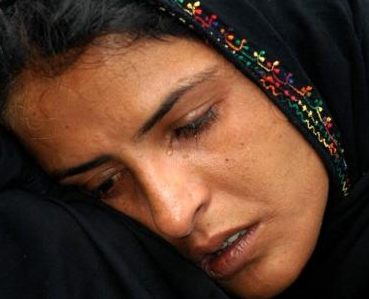
Mukhtaran Mai, Sanctimonious Judiciary & Pseudo Lawyers Movement.


[Musharraf-Iftikhar.jpg]
A lot people say if you want to go abroad... get yourself raped [General Musharraf] - Pakistani activists have reacted with outrage to recent comments on rape victims by President Pervez Musharraf. He said that rape was a "money-making concern" and many argued it was a way to get money and a visa to emigrate. Pakistan's most-high profile rape victim, Mukhtar Mai, told the BBC no woman could subject herself to "such a horrendous experience" to make money. Women's groups and activists protested in Karachi on Friday, shouting: "Down with chauvinism".


'Money for justice'


The president made his comments in an interview with the Washington Post on 13 September, incensing campaigners and others at home. "You must understand the environment in Pakistan. This has become a money-making concern," he said. "A lot of people say if you want to go abroad and get a visa for Canada or citizenship and be a millionaire, get yourself raped." In Karachi on Friday, 19 rights and advocacy groups vented their anger at the remarks, holding banners such as: "Who wants to be a millionaire - just get raped!" Sumar Mallah, a fisherman whose five-year-old daughter was raped and killed on 5 September, was at the rally. Mr Mallah said: "The police and the rapists have been insisting that I accept money and forget about my daughter. I will never settle for money. I want justice." Activist Fauzia Burney said: "General Musharraf's remarks are so shocking because they are so removed from reality."


Kal Aaj aur Kal (Abridged) Part 1/2 - Poem by Aitzaz Ahsan

URL: http://youtu.be/4PeOqHgvoDA


Kal Aaj aur Kal (Abridged) Part 2/2 - Poem by Aitzaz Ahsan

URL: http://youtu.be/ncxvGSdD0K4

Mukhtar Mai, who shot to world attention after being gang raped in 2002, allegedly on the orders of a village council or panchayat, earlier told the BBC: "I offer all the riches I've made out of the panchayat-enforced gang-rape to the president in return for justice." The Women's Action Forum described the president's comments as "outrageous". Last week President Musharraf told a conference on violence against women in Islamabad that Pakistan should not be singled out for its treatment of women. He also lashed out at rights groups for their role in highlighting cases such as Ms Mai's outside the country. Leading rights groups called the conference a "farce". The president's critics say he pays only lip service to cracking down on the abuse of women, hundreds of whom are raped and murdered every year in so-called honour cases in Pakistan. Despite government protestations that it is doing much to help women, many of those who try to register cases of rape and violence find it as hard as ever to do so, campaigners say. REFERENCE: Outrage at Musharraf rape remarks Last Updated: Friday, 16 September 2005, 13:55 GMT 14:55 UK http://news.bbc.co.uk/2/hi/south_asia/4251536.stm


MULTAN: A Pakistani victim of a village council-sanctioned gang-rape, who became a symbol of the country’s oppressed women, said on Thursday her life was in danger after the Supreme Court acquitted 13 men accused of the crime. Mukhtaran Mai was attacked on the orders of a village council in 2002 as a punishment because her brother – who was 12 at the time – was judged to have offended the honour of a powerful clan by allegedly having an affair with one of its women. Mai was an illiterate villager at the time but she defied taboos and shot to global fame by speaking out about her ordeal and taking her attackers to court. Mai had accused 14 men of being involved in raping her and in 2002, a court sentenced six of them to death while acquitting the others citing a lack of evidence. But in an appeal, the Lahore High Court not only upheld the eight acquittals but also overturned five of the six convictions. The death penalty for the sixth man, Abdul Khaliq, was commuted to life in prison. Mai appealed to the Supreme Court in 2005 but it rejected her appeal on Thursday, said Gohar Ali Shah, a lawyer for Mai.

Capital Talk (15th June 07) Part - 1

video

“I’m disappointed. Why was I made to wait for five years if this decision was to be given?” a sobbing Mai told Reuters by telephone from her village in the eastern province of Punjab shortly after the court announced the decision. “The accused can kill me and my family when they return home,” Mai said. Her courage in defying centuries-old rural customs of repressing women won her human rights awards and made her a role model for many women in Pakistan. She is running a school for girls in her village with donations from the government and supporters at home and abroad. Mai said she would neither flee her village nor the country. “Life and death are in the hands of Allah … I will not shut my school and other projects,” she said. The group Human Rights Watch expressed dismay at the court decision, saying the attack on Mai was a “crime that took place in full public view and the perpetrators were publicly identified”.


Capital Talk (15th June 07) Part - 2

video


“Today’s verdict by the Supreme Court of Pakistan on the Mukhtaran Mai case reflects poorly on the Supreme Court,” said Ali Dayan Hasan of the US-based rights group. He said Human Rights Watch was particularly concerned about Mai’s safety and called upon on the government to ensure her protection. “This is a setback for Mukhtaran Mai, the broader struggle to end violence against women and the cause of an independent, rights-respecting judiciary in Pakistan.” Mai said the 14 men involved in her rape were: Faiz Bukhsh Mastoi, Ramzan Pachar, Ghulam Fareed Mastoi, Allah Ditta Mastoi, Hazoor Bakhsh, two men both named Fayyaz Hussain, Aslam, Nazar Hussain, Ghulam Qasim, Hafiz Rasool Bakhsh, Ghulam Hussain, Mohammad Khalil and Abdul Khaliq. REFERENCE: Pakistan court acquits suspects in Mukhtaran Mai caseReuters April 21, 2011 (2 days ago) http://www.dawn.com/2011/04/21/supreme-court-upholds-lhc%E2%80%99s-verdict-in-mukhtaran-mai-case.html


Over 70 percent of women in jail in Pakistan report sexual abuse by police officials. Despite the high incidence of rape and sexual torture of female detainees, no police official has been subjected to criminal punishment for these abuses. Moreover even basic protections -- including requirements that female detainees be interrogated only in the presence of a female officer are routinely violated. Over 60 percent of women prisoners in Pakistan are detained under the Hudood Ordinance, penal laws prohibiting sex outside of marriage, which have had a devastating impact on women's rights. In some cases women have been imprisoned because they were unable to prove a rape charge and were thus charged with impermissible sex and imprisoned pending trial. Double Jeopardy, co-authored by the Women's Rights Project and Asia Watch, documents many cases of women who have been victims of Pakistan's discriminatory legal system and of police abuses and also makes recommendations to the government of Pakistan to end these abuses. REFERENCE: Double Jeopardy Police Abuse of Women in Pakistan MAY 1, 1992 http://www.hrw.org/en/reports/1992/05/01/double-jeopardy
Aitzaz Ahsan Crushing the Musharaf on Emergency

URL: http://www.youtube.com/watch?v=pynroVLZ0bY


The situation of women in Pakistan is by no means uniform. Conditions vary depending on geographical location and class, with the situation of women better in urban and middle- and upper-class sections of society, where there are greater opportunities for higher education and for paid and professional work, and women's social mobility is somewhat less restricted. (58) However, despite the relative advantages of women in some sectors, women from all walks of life in Pakistan remain second class citizens. Both the 1985 report of the Pakistan Commission on the Status of Women and the government's Sixth Five Year Development Plan (1988-1993) denounced the systematic discrimination that all Pakistani women face as a result of social and cultural norms and attitudes, as well as the "crippling handicaps of illiteracy, constant motherhood and poor health." (59) The 1985 report by the government-sponsored Commission concluded that "the average rural woman of Pakistan is born in near slavery, leads a life of drudgery and dies invariably in oblivion." (60) Seventy-five percent of Pakistan's female population of over fifty million is rural. (61) The average rural woman works 16 to 18 hours a day and will bear eight children in her lifetime. Approximately 80 percent of all pregnant and nursing women suffer from malnutrition. (62) Every year approximately 26,000 women die from complications due to childbirth and the general mortality rate of women is higher than that of men. The vast majority of women live in utter poverty and only 4.8 percent participate in the official labor force. Pakistan has one of the lowest female literacy rates in the world; only 16 percent of the female population can be said to be functionally literate, compared to 35.1 percent for men. (63) REFERENCE: Double Jeopardy Police Abuse of Women in Pakistan http://www.hrw.org/legacy/reports/1992/pakistan/  Double Jeopardy Police Abuse of Women in Pakistan http://www.hrw.org/en/reports/1992/05/01/double-jeopardy 

Capital Talk (15th June 07) Part - 3
video

Capital Talk (15th June 07) Part - 4

video

Capital Talk (15th June 07) Part - 5

video


Despite the social and economic hardships and discrimination suffered by the vast majority of Pakistan's women today, women did benefit from the social and political reforms that accompanied Pakistan's independence movement. As early as 1917, a group of women in India organized for improved educational opportunities and the right to vote for women. The colonial administration initially rejected the demand for the female franchise. But by 1935, with India's two major nationalist parties, the All-India Muslim League and the Indian National Congress, having joined the demand, women "with the requisite property and educational qualifications" -- the same restrictions imposed on men -- were granted the franchise. Moreover, for the first time, women were guaranteed 6 out of a total of 150 seats in the Council of State and 9 out of 250 seats in the Federal Assembly. (64) Women's participation in public life advanced so markedly during this period that by December 1938, the All-India Muslim Women's League had branches all over the country. How much progress women have been able to achieve in Pakistan has depended to a large extent on the political expediencies of the moment.


In the 1930s, before the partition of Pakistan and India, women played a central role in the Muslim League's efforts, under the leadership of Mohammed Ali Jinnah, to create a separate Muslim state. In 1944, Jinnah told a gathering at Aligarh University: No nation can rise to the heart of its glory unless your women are side by side with you. We are victims of evil customs. It is a crime against humanity that our women are shut up within four walls of the houses as prisoners. There is no sanction anywhere for the deplorable condition in which our women have to live. You should take your women along with you as comrades in every sphere of life. (65) Women galvanized popular support for the Muslim League, participated in public rallies and gatherings, and turned out in large numbers to vote in the 1945-46 elections. According to sociologist Farida Shaheed, "from 1940 to 1947 unprecedented numbers of women young and old from all classes broke the unwritten rules of conduct prescribed by purdah [seclusion of women]." (66) Women's participation was crucial in advancing the crusade by India's Muslim minority for an independent Pakistan, and they became an important symbol for the progressive forces within the All-India Muslim League advocating for a new nation. (67) REFERENCE: Double Jeopardy Police Abuse of Women in Pakistan http://www.hrw.org/legacy/reports/1992/pakistan/  Double Jeopardy Police Abuse of Women in Pakistan http://www.hrw.org/en/reports/1992/05/01/double-jeopardy
Aitzaz Ahsan Lawyers Movement Singing - Mar 3, 2009

URL: http://youtu.be/q9LLwAPMdaw

The Great Debate & Kasuri (GEO TV 2007)

video


http://criticalppp.com/wp-content/uploads/2010/01/Aasima-Iftikhar-Ch_Khalil-Ramday.jpgLAHORE: President Supreme Court Bar Association (SCBA) Asma Jahangir has criticised the Apex Court judgment in the Deedar Hussain Shah case, saying the suggestion made in it for consultation with the Chief Justice of Pakistan (CJP) for the appointment of the National Accountability Bureau chairman amounts to legislation by the bench and the striking down of the 19th amendment to the constitution. Addressing a press conference here on Tuesday, the SCBA president said the judgment is vague since it has suggested consultation with the CJP by the executive, though it stopped short of making this a law. She appreciated the ruling of the bench suggesting consensus-oriented consultation between the leader of the House and the leader of the Opposition, saying parliament needs to put its act together so as to avoid interference from other institutions. Asma Jahangir said suggesting consultation with the CJP by the executive for the appointment of the NAB chief is highly objectionable, as it would leave no room for arbitration for the judiciary, which is the ultimate forum for justice. Furthermore she said, the SCBA would resist any such move in which the office of the CJP was asked to play a role meant solely for the executive through parliamentary consultation. REFERENCE: SCBA slams SC judgement in NAB chief case Wednesday, March 30, 2011 http://www.dailytimes.com.pk/default.asp?page=2011\03\30\story_30-3-2011_pg1_8

She said a member of the bench that had passed the verdict had shed crocodile’s tears while consoling Deedar Hussain Shah, as it had to act against a brother judge. Asma Jahangir said the judiciary of Pakistan has a long history of acting against brother judges and the way it has insinuated and conducted contempt of court proceeding against ‘brother judges’ is unprecedented in the judicial history of the country. She said the SC judgment in the Deedar Hussain Shah case is not one celebrated by the Bar and contains lacunae that need to be addressed. Talking about the six-member bench verdict for striking down the parliamentary committee recommendations on the extension in service of six superior court judges, Asma Jahangir warned that the turf war between institutions was bound to get dangerous, implying that the judiciary has acted unwisely since it has for all practical purposes struck down the 19th amendment to the constitution. She said the consensus verdict had in fact decided the matter on the 19th amendment pending before a larger bench of the Apex Court and hailed a dissenting note to this effect by Justice Tariq Pervaiz, one of the members of the same bench. Asma Jahangir said the Judicial Commission has not only rendered the recommendations of the parliamentary committee ineffective, but has also made the CJP the sole authority of elevating judges to the superior judiciary. She said the observations made by the Chief Justices of the Sindh and Lahore High Courts had been unnecessarily ignored. REFERENCE: SCBA slams SC judgement in NAB chief case Wednesday, March 30, 2011 http://www.dailytimes.com.pk/default.asp?page=2011\03\30\story_30-3-2011_pg1_8

Ali Ahmad Kurd's famous address to Supreme court bar(part 1)

video


LAHORE: Judges of the higher judiciary are making up their minds about cases after reading newspaper headlines and watching TV shows, former president Supreme Court Bar Association (SCBA) Ali Ahmed Kurd said on Tuesday. Describing the present situation as “justice hurry and justice worry”, Kurd deplored the fact that the judges were visiting and addressing the bars and said they would have to “prove themselves worthy of their positions”. According to Kurd, judges in the United States neither read newspapers nor watched TV programmes, but focused only on their work. – ISLAMABAD: Ali Ahmed Kurd, the firebrand leader of the lawyers’ movement and former president of the Supreme Court Bar Association, who has been keeping quiet for quite some time, surprised a lot of people on Tuesday with his blunt criticism of the way the Supreme Court was behaving. Judges should “behave like judges”, he said. Speaking during a talk show on “Challenges facing the judiciary”, he said that people had reservations about the verdict handed down by the Supreme Court on petitions challenging the National Reconciliation Ordinance.According to him, the judgment appeared to be based on newspaper headlines and talk shows of private TV channels. REFERENCE: Kurd unhappy over SC verdict on NRO By Iftikhar A. Khan Wednesday, 23 Dec, 2009 http://www.dawn.com/wps/wcm/connect/dawn-content-library/dawn/the-newspaper/national/12-kurd-unhappy-over-sc-verdict-on-nro%E2%80%93bi-09 Judges deciding cases on media lines: Kurd Daily Times Monitor Wednesday, December 23, 2009 http://dailytimes.com.pk/default.asp?page=2009\12\23\story_23-12-2009_pg7_12 


’عدلیہ کی آزادی کے باوجود کچھ نہیں بدلا‘


ججز کیس کو ختم کرنےکو زیادہ اہمیت دے رہے ہوتے ہیں بجائے اس کی کہ انصاف کی فراہمی کی جائے:علی احمد کرد
سپریم کورٹ بار ایسوسی ایشن کے صدر علی احمد کُرد کا کہنا ہے کہ عدلیہ کی آزادی کے باوجود ابھی تک کچھ نہیں بدلا اور حالات اُسی طرح کے ہی ہیں جو نو مارچ سنہ دو ہزار سات سے پہلے تھے۔
علی احمد کرد نے عدالتی سال شروع ہونے کی تقریب سے خطاب کرتے ہوئے کہا کہ ایسا محسوس ہوتا ہے کہ ’فرعونوں‘ کےسامنے پیش ہو رہے ہوتے ہیں جو کیس کو ختم کرنےکو زیادہ اہمیت دے رہے ہوتے ہیں بجائے اس کے کہ انصاف کی فراہمی کی جائے۔
انہوں نے مزید کہا کہ یہی رویہ نو مارچ سنہ دوہزار سات سے قبل اعلٰی عدلیہ کے ججوں سے لےکر مقامی عدالتوں کے ججوں کا تھا۔
واضح رہے کہ سابق ملٹری ڈکٹیٹر جنرل ریٹائرڈ پرویز مشرف نے نو مارچ کو چیف جسٹس افتخار محمد چوہدری کے خلاف سپریم جوڈیشل کونسل میں ریفرنس بھیجا تھا۔
ماتحت عدالتوں کے فیصلوں کے خلاف ایک سو پچاس کے قریب پٹیشنز ریلیف کے لیے دائر کی جاتی ہیں جس میں سے بہت کم کو سول یا فوجداری اپیلوں میں تبدیل کردیا جاتا ہے جبکہ باقی رد کردی جاتی ہیں
علی احمد کرد
یہ پہلی مرتبہ ہے کہ ججوں کی بحالی کی تحریک کی کامیابی کے بعد وکلاء کے کسی سرکردہ رہنما نے کُھل کر ججوں کے رویے کے بارے میں تنقیدی کلمات کہے ہیں۔
علی احمد کُرد نے کہا کہ ججوں کی بحالی کے لیے شروع کی جانے والی تحریک میں نہ صرف وکلاء نے ان کا ساتھ دیا بلکہ سول سوسائٹی اور انسانی حقوق کی تنظیموں نے بھی اس میں بڑھ چڑھ کر حصہ لیا۔
انہوں نے کہا کہ اس تحریک میں وکلاء نے اپنی قیمتی جانوں کے نذرانے بھی پیش کیے۔ سپریم کورٹ بار کے صدر کا کہنا تھا کہ لوگ اُن سے یہی سوال پوچھتے ہیں کہ اس تحریک کی کامیابی کے کیا اثرات سامنے آئے ہیں۔
انہوں نے کہا کہ مشاہدے میں آیا ہے کہ وکلاء نے جو پٹیشنز دائر کی تھیں اُن میں سے بہت کم درخواستوں کو دیوانی یا فوجداری اپیلوں میں تبدیل کیاگیا ہے۔ انہوں نے کہا کہ ماتحت عدالتوں کے فیصلوں کے خلاف ایک سو پچاس کے قریب پٹیشنز ریلیف کےلیے دائر کی جاتی ہیں جس میں سے بہت کم کو سول یا فوجداری اپیلوں میں تبدیل کردیا جاتا ہے جبکہ باقی رد کردی جاتی ہیں۔
علی احمد کُرد کا کہنا تھا کہ وکلاء ذمہ دار افراد ہیں اور کوئی بھی یہ نہیں چاہے گا کہ کوئی ایسی بےمقصد پٹیشن دائر کی جائے جس سے عدالت کا قیمتی وقت ضائع ہو۔ انہوں نے کہا کہ عدالت کا یہ فرض ہے کہ وہ وکلاء کو تحمل کے ساتھ سنے۔
’عدلیہ کی آزادی کے باوجود کچھ نہیں بدلا‘
http://www.bbc.co.uk/urdu/pakistan/2009/09/090907_kurd_hit_judiciary_rr.shtml
Monday, 7 September, 2009, 12:58 GMT 17:58 PST


Ali Ahmad Kurd's famous address to Supreme court bar(part 2)


video


Right after the resignation of General Musharraf from the Post of the President of Pakistan, Mr. Athar Minallah the Chief Spokesman of the then defunct Defunct Chief Justice Iftikhar Mohammad Chaudhary in Private Pakistani TV Channel [AAJ], demanded Treason Trial under article 6 of 1973 Constitutiuon of Islamic Republic of Pakistan while shamelssly forgetting that Athar Minallah, also served in the Musharraf cabinet for two years. Shouln’t Mr Athar Minallah be brought to Justice as well because abetting in a crime is tantamount to committing a crime. Athar was appointed Minister for Law, Local Government, Parliamentary Affairs and Human Rights by the Provincial Government of NWFP (2000-2002) by General Musharraf Military Regime. Athar Minallah joined the prestigious Civil Service of Pakistan (CSP) and after serving for 10 years left the post of Additional Collector Customs to join the firm as a partner. Athar Minallah brings not only rich taxation experience but also valuable scholastic input. Athar completed his law degree from the International Islamic University (Islamabad) and his LLM from University of Cambridge, UK. And his areas of interest are taxation, judicial review, Athar was appointed Minister for Law, Local Government, Parliamentary Affairs and Human Rights by the Provincial Government of NWFP (2000-2002). He also was the member of the Task Force constituted by the Federal Government for revamping the Taxation regime in Pakistan. Currently he is the member of the Policy Board of Intellectual Property of Pakistan and Chairman of Alternate Dispute Resolution Committee (ADRC) for Sales Tax constituted by the Central Board of Revenue.

Judicial Dictatorship & Lawyers - Part - 1 (GEO 22 Dec 2009)


URL: http://www.youtube.com/watch?v=kbTD-ZtDPkg


PCO JUDGES VALIDATED MARTIAL LAW OF MUSHARRAF [History as reported by Daily Dawn]


[Musharraf-Iftikhar.jpg]Chaudhry Iftikhar named new CJ [Daily Dawn 2005] By Our Staff Reporter ISLAMABAD, May 7: President Pervez Musharraf on Saturday appointed Justice Iftikhar Mohammad Chaudhry, the senior most judge of the Supreme Court, as the next chief justice. He will assume the office on June 30 after retirement of the incumbent Chief Justice, Justice Nazim Hussain Siddiqui, on June 29. “The notification has ended speculations of appointment of a junior judge as chief justice in violation of the seniority principle settled under the 1996 Judges case,” commented a senior Supreme Court lawyer on condition of anonymity. Justice Chaudhry will reach the superannuation age of 65 years in 2012, which will make him one of the longest serving chief justices in the judicial history of Pakistan. He will serve as chief justice for over seven years. Earlier Justice A. R. Cornelius and Justice Mohammad Haleem served as chief justice for eight years from 1960 to 68 and 1981 to 89, respectively. Justice Chaudhry was elevated as a judge of the apex court on February 4, 2000. He has performed as acting chief justice from January 17 to 29, 2005. He holds the degree of LLB and started practice as an advocate in 1974. Later he was enrolled as an advocate of high court in 1976 and as an advocate of Supreme Court in 1985. In 1989, Justice Chaudhry was appointed as advocate-general of Balochistan and elevated to the post of additional judge in the Balochistan High Court in 1990. He also served as banking judge, judge of Special Court for Speedy Trials and Customs Appellate Courts as well as company judge. He served as the chief justice of the Balochistan High Court from April 22, 1999 to February 4, 2000. He was elected the president of the High Court Bar Association, Quetta, and twice a member of the Bar Council. He was appointed as the chairman of the Balochistan Local Council Election Authority in 1992 and for a second term in 1998. Justice Chaudhry also worked as the chairman of the Provincial Review Board for Balochistan and was appointed twice as the chairman of the Pakistan Red Crescent Society, Balochistan. Presently he is functioning as the chairman of the Enrolment Committee of the Pakistan Bar Council and Supreme Court Buildings Committee. Reference: Caudhry Iftikhar named new CJ By Our Staff Reporter May 8, 2005 Sunday Rabi-ul-Awwal 28, 1426 http://www.dawn.com/2005/05/08/top4.htm  


Judicial Dictatorship & Lawyers - Part - 2 (GEO 22 Dec 2009)

URL: http://www.youtube.com/watch?v=e9Igv1kg5gU


http://criticalppp.com/wp-content/uploads/2011/02/ramday.jpg
LAHORE, June 27: The Lahore High Court summarily dismissed three writ petitions challenging the assumption of the President's office by Chief Executive Pervez Musharraf. The petitions were filed by Advocates MD Tahir, Amir Sohail and Hanif Tahir. The first-mentioned two argued at some length while the last-mentioned told Justice Khalilur Rahman Ramday, who heard the petitions, that he had reservations about him on account of his pro-government sympathies but would, instead of seeking transfer, leave the matter to his conscience. Advocate MD Tahir said frequent military interventions, prompted by politicians and invariably condoned and validated by the judiciary, have greatly damaged Pakistan in all spheres of life. Advocate Amir Sohail submitted that the Supreme Court recognized Gen Pervez Musharraf as chief executive for three years and his elevation to the office of President was repugnant to the SC judgment in Zafar Ali Shah's case. Under the judgment and the provisional constitution order validated by it the country is to be governed as nearly as possible in accordance with the provisions of the 1973 Constitution. Mr Rafiq Tarar could not have been removed except by impeachment. Justice Ramday observed that the 1973 Constitution was in existence by virtue of the PCO as amended from time to time and dismissed the three petitions. REFERENCE: LHC rejects pleas against Musharraf's presidency Staff Reporter DAWN WIRE SERVICE Week Ending : 30 June 2001 Issue : 07/26 http://www.lib.virginia.edu/area-studies/SouthAsia/SAserials/Dawn/2001/jun3001.html#lhcr


Judicial Dictatorship & Lawyers - Part - 3 (GEO 22 Dec 2009)

URL: http://youtu.be/S7VBbtAyPWE


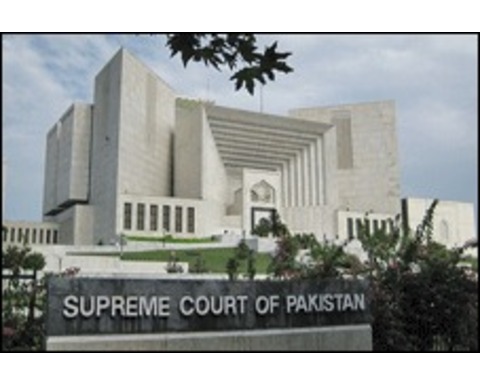
http://sheddy73.files.wordpress.com/2009/08/pakistan-supreme-court.jpg

ISLAMABAD, Feb 2: The government elevated five judges to the Supreme Court on Wednesday. According to a notification, the president has appointed Justice Rashid Aziz, Chief Justice, Lahore High Court; Justice Nazim Hussain Siddiqui, Chief Justice Sindh High Court; Justice Iftikhar Mohammad Chaudhry, Chief Justice, Balochistan High Court; Qazi Farooq, former chief justice of Peshawar High Court; and Justice Rana Bhagwan Das, judge, Sindh High Court, judges of the Supreme Court. After the elevation of Justice Rashid Aziz Khan to the SC, Justice Mohammad Allah Nawaz has been appointed Chief Justice of Lahore High Court. Justice Deedar Hussain Shah has been appointed Chief Justice of Sindh High Court and Justice Javed Iqbal Chief Justice of Balochistan High Court. After these appointments, the number of SC judges has risen to 12, leaving five posts vacant. REFERENCE: Five judges elevated to SC Bureau Report DAWN WIRE SERVICE Week Ending : 5 February 2000 Issue : 06/05 http://www.lib.virginia.edu/area-studies/SouthAsia/SAserials/Dawn/2000/05feb00.html#five


Judicial Dictatorship & Lawyers - Part - 4 (GEO 22 Dec 2009)

URL: http://youtu.be/oPAn4TC1se8


http://sheddy73.files.wordpress.com/2009/08/pakistan-supreme-court.jpgISLAMABAD, April 25: President Mohammad Rafiq Tarar on Tuesday appointed five judges to the Supreme Court of Pakistan. With the appointment of these judges, the strength of the Supreme Court judges, i.e. 17, stands completed. The newly-appointed judges include Justice Mian Mohammad Ajmal, Chief Justice, Peshawar High Court; Justice Deedar Hussain Shah, Chief Justice, High Court of Sindh; Justice Javed Iqbal, Chief Justice, High Court of Balochistan; Justice Hamid Ali Mirza, judge, High Court of Sindh and Justice Abdul Hameed Dogar, judge, High Court of Sindh. These judges have been appointed to the SC from the date they respectively take upon themselves the execution of their offices as such judges. Following are the names of the judges of the Supreme Court according to their seniority:

1. Justice Irshad Hassan Khan, Chief Justice of Pakistan,

2. Justice Mohammad Bashir Jehangiri,

3. Justice Sheikh Ijaz Nisar,

4. Justice Sheikh Riaz Ahmed,

5. Justice Ch. Mohammad Arif,

6. Justice Munir A. Sheikh,

7. Justice Abdul Rehman Khan

8. Justice Rashid Aziz Khan,

9. Justice Nazim Hussain Siddiqi,

10. Justice Iftikhar Mohammad Chaudhry,

11. Justice Qazi Mohammad Farooq,

12. Justice Rana Bhagwan Das,

13. Justice Mian Mohammad Ajmal,

14. Justice Deedar Hussain Shah,

15. Justice Javed Iqbal,

16. Justice Hamid Ali Mirza,

17. Justice Abdul Hameed Dogar.-APP

REFERENCE: Supreme Court judges' strength completed DAWN WIRE SERVICE Week Ending : 29 April 2000 http://www.lib.virginia.edu/area-studies/SouthAsia/SAserials/Dawn/2000/apr29.html#supre


Judicial Dictatorship & Lawyers - Part - 5 (GEO 22 Dec 2009)

URL: http://youtu.be/C8KA5k6mAR0


Reality of Lawyers Movement in Pakistan.

"One wonders how an Incommunicado CJ was issuing statement often published in The New York Times/Washington Post and "successfully" telecast on CNN "during his days in Bastille"


URL: http://youtu.be/tkzkHS6WRSE

TAIL PIECE:

Why do we forget that Lawyers Movement was basically a game to ease out Pakistan Army from the mess which was the creation General Pervez Musharraf and Military Establishment. CJ basically attained a lot from 2000 to 2007 [March to be precise]. I wonder how an Incommunicado CJ was issuing statement often published in The New York Times/Washington Post “during his days in Bastille” - [I still fail to understand that when CJ was sacked in March 2007, he and the press said the CJ is under house arrest and held incommunicado whereas the very next day Air Marshal [R] Asgher Khan “successfully” met him As per Daily Dawn dated March 12, 2007 Monday Safar 22, 1428 

"ISLAMABAD, March 11: Chief Justice Iftikhar Mohammad Chaudhry has demanded that the Supreme Judicial Council (SJC) should hold open proceedings on the reference against him sent by President Gen Pervez Musharraf. This was stated by seasoned politician Air Marshal (retired) Asghar Khan after a meeting with Justice Chaudhry here on Sunday. The demand made by the suspended chief justice indicates that he is not ready to resign and is determined to contest the allegations levelled against him. - But one day earlier the CJ was held incommunicado - “There is no other way to describe the situation as no one is being allowed to meet him,” he said after police officials stopped him and other lawyers from going inside the chief justice’s residence. REFERENCES: Justice Iftikhar seeks open SJC proceedings: Asghar By Iftikhar A. Khan March 12, 2007 Monday Safar 22, 1428 http://www.dawn.com/2007/03/12/top1.htm CJ held incommunicado; lawyers slam ‘arrest’ By Nasir Iqbal http://www.dawn.com/2007/03/11/top1.htm