Free Website Hosting
Showing posts with label Saudi Arbia. Show all posts

Saturday, October 30, 2010

Saudi pink ribbon breaks Guinness record


Arab News   
JEDDAH, Oct 29: Over 5,000 Saudi and expatriate women on Thursday created the world’s largest human pink ribbon in aid of breast cancer awareness in Jeddah.
According to organizers, the number of women coming into the Education Ministry Stadium in the Faisaliah district exceeded 5,000. However, around 1,000 left before the actual formation of the ribbon due to the delays in getting the sheer numbers of people organized.
The women were able to break the record within the first two hours of the event, as both Saudis and expatriate residents came out in droves to support one single yet very important cause.
The Riyadh-based Zahra Breast Cancer Association organized the event. Princess Reema bint Bandar bin Sultan, founding member of the association, was the driving force behind the campaign, held under the support of the Sultan bin Abdul Aziz Foundation.
Princess Reema said the private sector and the government have been very supportive of the foundation’s breast cancer awareness initiative.
“Let it be known that as of this day, ignorance is no longer an excuse and no woman should be allowed to be left to suffer in silence,” Princess Reema had said at the launch of the awareness campaign.
Attendance at Thursday’s event easily topped the previous record of 3,640 set in Germany in 2007. Thousands of pink scarves were distributed at the entrance gate and the women returned them to the organizers when they left.
The pink human chain, consisting of both Saudis and expatriate residents donning the pink tops and scarves, was built in the shape of the global ribbon of breast cancer awareness.
Saudis and foreign residents, including Arabs, Indonesians, Americans, British, Filipinos and Asians, had been streaming into the stadium since 5 p.m. Only those with transport problems and young children left early.
Participant Aseel Hindi is a 26-year-old math teacher who came all the way from Makkah. “We knew about the event through Facebook three days ago, and we as friends managed to gather and come a long distance to be part of the new Guinness record for the first time ever in our lives,” she said. Over 100 media outlets from around the globe also attended.
It was also the first time women in Jeddah were able to experience the atmosphere of a stadium in the Kingdom.
The stadium was half open, which led participants to cluster in one place. Students from different schools and universities as well as employees of companies and hospitals attended.
Some students said the atmosphere was great and enjoyed socializing with each other. Sixteen-year-old high school student Nouf said she and her classmates knew nothing about the illness and were only there because they had been asked to attend by their teachers.
According to Colleen, who came along with her British friends at the start to support the cause, the event was great but the numbers caused some delays.
“We came because we really wanted to be part of (this event) because it is the first time that something like this is happening in Saudi Arabia,” she said.
“It is disappointing, everybody here wants to be part of this and be involved, but it [took] a long time.”
Private school teachers were in a rush to leave because they had to take the pupils back to school. One of the teachers said: “We’ve been here since five and have promised (parents) that the students will be back by 9:30 p.m. and the event is going on for too long.”
“I thought some sessions or awareness flyers would be distributed to help us learn more about the illness. We even expected some victims to come,” said participant Um Tariq.
Breast cancer is the most-diagnosed form of cancer in Saudi Arabia, accounting for 12.4 percent of all cancers and 23.6 percent of cancers among women, according to a study by the Saudi Cancer Registry.

Wednesday, February 24, 2010

Head Count


The Kingdom of Saudi Arabia will be taking a census of the entire country in the coming months. This will be the fourth census taken since 1974. The last census which was in 2004 revealed the population of the country to be 22 million, comprised of about 73% Saudi nationals (about 16.5 million), and the rest were expatriates from other countries. In the entire Gulf Coast region, Saudi Arabia is the largest country both in land area and in population, making up a good 60-65% of the populous of the region.


The Kingdom has employed and trained about 40,000 workers to conduct the census. The Saudi government has called upon all Saudi citizens and foreigners to cooperate in providing accurate information to the various questions concerning the demographics, economic and social makeup of all people living here. The census form consists of 59 questions and supposedly takes about 15 minutes to complete. The entire Gulf region is working together to take a joint census in all of the Gulf countries.

I can't really speak for the other Gulf area countries, but I can only imagine what a difficult and challenging task this must be to undertake in a place like Saudi Arabia, especially considering how this society is set up. First of all, I would doubt that there would be any female census takers since women cannot drive and it wouldn't be acceptable for a woman to come calling to a stranger's home, even if she would be on official state business. The working hours here are so irregular because of the five prayer times during each day, that I wonder how these census takers will manage to find men at home to talk to because if the man of the house is not at home when the census takers arrive, the women will not open the door or speak to a strange man. Many men work normally into the evening hours because the working day is chopped up so much to accommodate prayer times.

Another problem I see is that there are no street addresses here in Jeddah, and I think it's the same in the rest of the country. Many streets do not even have names. Logistically speaking, taking a census here must be a nightmare. What about the thousands of Bedouins who still roam the deserts here and don't really have one permanent abode? There are many who still live in tents and move frequently. How can anyone ensure that they will be counted? Yet another questionable issue is the fact that Saudi Arabia has so many poor and uneducated illegal aliens living here. Thousands have come to this country on the pretense of fulfilling their Hajj requirement in Islam and end up staying here permanently and illegally, in hopes of forging a better life than what they had in their own countries. Even though I read that these overstayers need not worry about being caught and sent back to their countries or thrown in jail, I'm sure that most of them will not get this message and would be fearful of answering questions like this. I just don't see how accurate a census can really be here.

I would just love to see the census form: Head of Household; Wife #1 and children; Wife #2 and children; etc. Number of people total in the household, including all wives and children, grandparents, maids, drivers, gatekeepers, nannies, cooks, etc. This could be really interesting...

Thursday, September 17, 2009

Women Can't Drive Here, But Children Can!

I drove cars legally in the United States for 40 years before moving to Saudi Arabia. I got an "A" in my Driver's Ed class in high school (shout out to Coach Sharp!) and I have always passed my driver's tests on the first try. I have an excellent driving record. The Kingdom of Saudi Arabia, however, bans women from driving, although out in the sparsely populated areas, women are known to drive there. To my knowledge, it is the only country in the world where it is illegal for women to drive. The most common excuse given for why women are not allowed to drive here is that it's for their own safety and protection. Now this excuse of safety doesn't really refer to the dangers of having or causing accidents. What it actually refers to is the potential for women to have more freedom and to not be under the direct control of a man. The thinking is that a woman driver would have more of a chance to hook up with someone of the opposite sex if she wanted to, which is a big no-no in this country. The funny thing is that I have spoken to many Saudi women who drive outside this country, and they have all managed to avoid becoming sluts - which is what some Saudi men think of all women drivers elsewhere in the world. You can read a previous post I wrote about this subject not long ago.

Granted, the driving conditions here in Jeddah are horrendous. Just imagine all that testosterone gunning those engines in a land where only men are allowed behind the wheel! Traffic laws seem to be non-existent here, and if there ARE traffic laws, nobody follows them and no one visibly enforces them either.


But what really galls me is the fact that I - a responsible female driver with a proven track record of safety and skill and years of experience - am not allowed to drive here in Saudi Arabia, yet frequently I have seen children - specifically young boys - driving who are definitely not old enough to have a driver's license. I have tried to find out the legal driving age requirement here in Saudi Arabia, but that information is as elusive as the traffic laws. I've seen various accounts that range from 17 up to 25, and just about every age in between. All I do know is that many of the drivers I have seen here are nowhere close to approaching their 17th birthday, let alone 25.

One day I was crossing the street in a quiet residential section of town, and I was almost run over by a car driven by a boy who looked as though he couldn't have been a day over 10! These young boys drive, stretching and craning their necks in an effort to see over the steering wheel. Many of them have to sit on pillows. I don't know how they can possibly reach the gas pedal, or more importantly, the brake pedal! This is not something I see every day because I am not out and about every day, but it happens with enough frequency that I am not shocked any more when I see it - just angered that I am not allowed to drive here, yet these spoiled little brats CAN. As in many countries of the world, most boys here are raised to believe that they are superior to their sisters and are given special privileges just because they were born with a little extra appendage that girls don't have.

Even though the photos accompanying this post are of poor quality, hopefully you can see that there is a child - I'm guessing he's about eight years old - driving this big SUV on the busy streets of Jeddah AT NIGHT, during Ramadan, when traffic is especially heavy.

In the front passenger seat is a bearded grown man, probably his father, visible in the photo below.

It's hard to make out, but there are two other children in the back seat. None of the vehicle's occupants are wearing their seatbelts, of course. Most Saudis do not wear seatbelts as a rule, nor do they impress upon their children the importance of doing so.

I really resent the fact that I am not permitted to drive here in Saudi Arabia while young boys, who aren't even into double digits in age, can and do, without penalty or objection. I am NOT one of the many fortunate women here in this country who is provided with her own driver and vehicle. Consequently I am stuck at home much of the time with not much to do. My life has been reduced to accepting invitations only when my husband agrees to drive me, which he HATES to do, or when I'm lucky enough to be invited by one of my friends who can send her driver for me. My mobility here is severely restricted, and it is something I cannot get used to. To go from having my own car and the ability to drive where and when I wanted all my life to a country where I cannot is disheartening. Women who are caught driving in Saudi Arabia are usually hauled down to the police station, arrested, and can only be released to their male guardian (see corroborating news article).

To me this whole system makes no sense. Not allowing women to drive causes many hardships on a family, financial burdens if the family has to hire a driver, added stress on the man of the family to drive the women around, inconveniences for everyone, makes it difficult for women to get to and from work (so most women do not work here), and more. Women here in Saudi Arabia face many challenges and barriers created by the men which make it difficult for the women with desires for a more meaningful life to become more valued contributing members of this society. When men here say women cannot drive for their own protection, yet they turn around and permit little boys to get behind the wheel in busy traffic on the streets of Jeddah, putting everyone in their paths in harms way, there is no other word for it than "preposterous." The intended purpose behind not allowing women to drive here is totally flawed and unreasonable. It all boils down to a control issue, aimed at treating women like children and at keeping women at home.

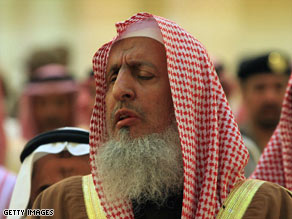
Top Saudi cleric: OK for young girls to wed

Saudi cleric Sheikh Abdul Aziz Al-Sheikh says it's OK for a girl age 10 or 12 to get married.

Saudi cleric Sheikh Abdul Aziz Al-Sheikh says it's OK for a girl age 10 or 12 to get married.

(CNN) -- The debate over the controversial practice of child marriage in Saudi Arabia was pushed back into the spotlight this week, with the kingdom's top cleric saying that it's OK for girls as young as 10 to wed.

"It is incorrect to say that it's not permitted to marry off girls who are 15 and younger," Sheikh Abdul Aziz Al-Sheikh, the kingdom's grand mufti, said in remarks quoted Wednesday in the regional Al-Hayat newspaper. "A girl aged 10 or 12 can be married. Those who think she's too young are wrong and they are being unfair to her."

The issue of child marriage has been a hot-button topic in the deeply conservative kingdom in recent weeks.

Late last month, a Saudi judge refused to annul the marriage of an 8-year-old girl to a 47-year-old man.

The judge, Sheikh Habib Abdallah al-Habib, rejected a petition from the girl's mother, whose lawyer said the marriage was arranged by her father to settle a debt with "a close friend." The judge required the girl's husband to sign a pledge that he would not have sex with her until she reaches puberty.

Al-Sheikh was asked during a Monday lecture about parents forcing their underage daughters to marry.

"We hear a lot in the media about the marriage of underage girls," he said, according to the newspaper. "We should know that Shariah law has not brought injustice to women."

Christoph Wilcke, a Saudi Arabia researcher for Human Rights Watch, recently told CNN that his organization has heard many other cases of child marriages.

"We've been hearing about these types of cases once every four or five months because the Saudi public is now able to express this kind of anger -- especially so when girls are traded off to older men," Wilcke said.

Wilcke explained that while Saudi ministries may make decisions designed to protect children, "It is still the religious establishment that holds sway in the courts, and in many realms beyond the court."

Last month, Zuhair al-Harithi, a spokesman for the Saudi government-run Human Rights Commission, said his organization is fighting against child marriages.

"The Human Rights Commission opposes child marriages in Saudi Arabia," al-Harithi said. "Child marriages violate international agreements that have been signed by Saudi Arabia and should not be allowed." He added that his organization has been able to intervene and stop at least one child marriage from taking place.

Wajeha al-Huwaider, co-founder of the Society of Defending Women's Rights in Saudi Arabia, told CNN last month that achieving human rights in the kingdom means standing against those who want to "keep us backward and in the dark ages."

She said the marriages cause girls to "lose their sense of security and safety. Also, it destroys their feeling of being loved and nurtured. It causes them a lifetime of psychological problems and severe depression."

The Saudi Ministry of Justice has made no public comment on the issue.

Monday, August 24, 2009

Mugged in Saudi Arabia


My teenaged son, Adam, also known as Captain Kabob, was mugged on the streets of Jeddah last night - ironically the night before the start of Ramadan, the holiest month of the year for Muslims. He made a bad decision and mistakenly got into a car he thought was a taxi and he was taken for a ride, robbed and shoved out of the moving vehicle. He was fortunate. He could have been more seriously injured than he was, beaten up or sexually assaulted or even killed. And the thugs only got away with his mobile phone, when they could have taken his backpack which had his computer in it or his brand new 16 Gig IPOD he got in the states this summer. He was indeed lucky.


Adam has taken taxis here in Jeddah before and he has had very good experiences. My husband and I agreed to let him go to a friend's home to spend Friday night. It would be his last opportunity to do this before his school starts on Sunday. He packed up his clothes, toothbrush, and his computer into his school backpack and headed out the door around 6pm, before dark. Taxis are abundant here in Jeddah since women cannot drive themselves, and one always comes around within minutes if you are walking along the street.

A dark car pulled up alongside Adam. The warning signs were there that should have tipped my son off that something was just not right. The car did not have the identifying TAXI light on top of the car, but it had some gold lettering on the outside that Adam could not read. The car had TWO young Yemenese men inside who told him they operated as a taxi and they could take him where he needed to go. Adam said "No!" and continued walking. The car caught up with him and somehow those thugs talked him into getting into the car with them. My big, hairy teenage son, who has always been taught by me since he was a small child to be careful and not to get into cars with strangers, accepted their made up tale about being a taxi and got into the car!

Now Adam hasn't wanted to talk much about the incident since it happened, so I'm not exactly sure how it all went down. Adam made a phone call to his friend to tell him that he was on his way. When Adam hung up, one of the thugs asked to see his phone, so Adam handed it over. Now Adam's phone admittedly was much nicer than the cheap phones my husband and I have, but it was not the most expensive by far, plus it was two years old. Then before he knew it, Adam was being forced, pushed and kicked out of the moving car. He tumbled out onto the street, and luckily his backpack came with him - the computer was not damaged, thank goodness. A woman in the car behind saw the whole thing and told her son to stop and assist Adam. The kind young man brought Adam home. He was bleeding and had scraped both elbows and had abrasions on his back, and his wrist was swollen and hurting. We immediately took Adam to a clinic to have him cleaned up and to have his wrist checked. It was not broken, just badly sprained. His wrist was wrapped up and Adam was given a shot and a couple of prescriptions. We also called to have the service on his phone disconnected.

My husband was horrified that something like this could happen to our son here in Jeddah. Crime is a lot lower here than in the states, mostly because of the swift and severe punishments that are handed out, if one is caught and convicted. But this shows that we are not immune to bad things happening to us here, or anywhere. There are some pretty bad people out there. I'm just thankful that Adam is okay and that all they took from him was phone. Now we'll just have to work on his bruised ego...

P.S. - I must add that a week ago, my phone fell out of my pocket while I was in a taxi here in Jeddah. When I realized it was missing, we called my number and the taxi driver answered the phone. My husband gave him directions to our home and he drove all the way to deliver my phone. When my husband tried to give him a reward, the man didn't want to accept the money, but my husband insisted. There are plenty of good people here in Jeddah.